
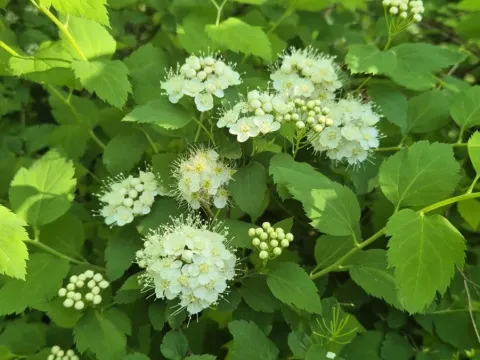
Germander meadowsweet
Spiraea chamaedryfolia
Germander meadowsweet (Spiraea chamaedryfolia) is a perennial deciduous shrub belonging to the Rosaceae family. It is widely recognized for its robust growth habit and is commonly used in various landscaping projects due to its resilience and aesthetic appeal.
What the section contains
Germander meadowsweet
Native to Eastern Europe, Siberia, and parts of Asia, this shrub is well-adapted to cool temperate climates. It thrives in diverse soil types, ranging from sandy loams to heavier clay soils, provided that adequate drainage is maintained to prevent root stagnation.
Successful cultivation requires a location with full sun exposure, although the plant is capable of tolerating partial shade. While it shows good drought resistance once established, consistent soil moisture during the initial growing seasons significantly enhances its overall vitality.
Agronomic management involves annual pruning after the flowering period to remove old wood and stimulate new growth. This practice ensures that the shrub maintains a dense, attractive form and produces a profusion of white flowers during the next spring season.
The plant serves multiple purposes in agricultural landscapes, primarily as a decorative element for hedges, shelterbelts, and soil erosion control on slopes, thanks to its extensive and fibrous root system.
Aphids represent the most common pest problem for this shrub, frequently attacking the tender tips and developing buds during the spring growth phase, which can lead to stunted shoot development.
Spider mites are another major concern, especially during dry summer months. Their feeding activity causes leaves to lose their green color, appearing stippled and greyish, which significantly impacts the ornamental value of the plant.
Fungal diseases, particularly powdery mildew, may affect the foliage under conditions of poor air circulation and high humidity, manifesting as white or grey dusty spots on the surface of the leaves.
Effective management includes regular sanitation practices, such as removing fallen leaves and pruning away infected branches, which helps to reduce the inoculum levels of potential pathogens in the garden area.
In cases of severe infestation, targeted pesticide applications are recommended. It is essential to use products labeled for woody ornamentals and to follow all safety guidelines to minimize the impact on local pollinator populations.