
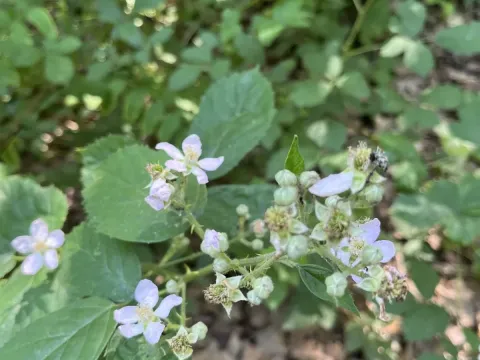
Georgian blackberry
Rubus ibericus
The Georgian blackberry (Rubus ibericus) is a perennial shrub belonging to the Rosaceae family, native to the Caucasus region and surrounding territories.
What the section contains
Georgian blackberry
This crop thrives in fertile, well-drained soils with a slightly acidic to neutral pH. Proper soil preparation is essential to prevent waterlogging, as the root system is highly sensitive to hypoxia in poorly drained environments.
Botanically, the plant is characterized by arching or trailing canes that are often armed with sharp prickles. In cultivation, managing these canes via trellising systems is vital for productivity and air circulation.
Rubus ibericus requires ample sunlight for optimal fruit development. While it adapts to various temperate conditions, consistent moisture levels during the flowering and fruit-setting stages are crucial for yield stability.
Agricultural management involves annual pruning to remove spent canes, which helps focus energy on new, vigorous vegetative growth for the following season.
Common diseases affecting the Georgian blackberry include grey mold (Botrytis cinerea) and anthracnose, which typically flourish in conditions of high humidity and poor ventilation.
Pest pressures are primarily caused by the blackberry mite, which can deform drupelets and cause uneven ripening, significantly reducing the market value of the harvest.
Other threats include leaf spot pathogens and various aphid species that compromise the health of foliage and reduce photosynthetic capacity.
Effective management strategies include cultural practices like removing infected plant debris and applying targeted organic or chemical treatments when necessary.
Maintaining a clean, weed-free area around the plants is essential to prevent the spread of soil-borne pathogens and to improve overall plant vigor.
Harvesting the Georgian blackberry requires careful, labor-intensive hand-picking, as the fruits are fragile and prone to bruising if handled incorrectly.
Optimal harvest time is determined by the development of a deep black color and a soft texture, indicating that the fruit has reached its peak sugar content and flavor.
Once harvested, the berries should be placed in shallow containers to prevent weight-induced damage and stored at cooler temperatures to maintain freshness.
The crop is highly valued for both fresh consumption and processing into preserves, juices, and various culinary products due to its unique taste profile.
Effective post-harvest handling, including prompt cooling, is critical to ensuring the longevity and quality of the berries for both local markets and long-distance distribution.