
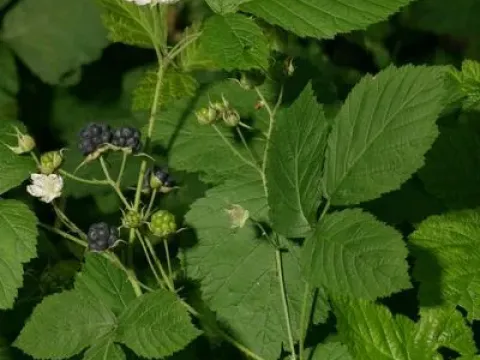
Genevier's blackberry
Rubus genevieri
Genevier's blackberry (Rubus genevieri) is a perennial semi-shrub belonging to the Rosaceae family. This species is native to European territories and is recognized for its adaptability to temperate climate zones, forming robust growth in favorable environmental conditions.
What the section contains
Genevier's blackberry
The plant thrives in well-lit, sunny areas but demonstrates resilience in partial shade. Soil quality is a primary factor for success; the shrub prefers well-drained, fertile loams that maintain consistent moisture levels without becoming waterlogged, which is detrimental to the roots.
Regarding soil chemistry, a slightly acidic to neutral pH is optimal for nutrient uptake. Adequate organic matter incorporation during the preparation stage enhances the soil structure, providing the necessary minerals to support vigorous vegetative development and annual fruit set.
Agrotechnical management typically requires the installation of a trellis system. As the canes tend to sprawl, keeping them off the ground is essential for preventing rot, improving air circulation, and facilitating easier access during the harvesting season for the growers.
Climate requirements include protection from extreme winter frosts. In colder regions, providing mulch at the base of the plant and bending the canes towards the ground for protective covering is standard practice to prevent cold-induced damage to the cambium layer.
The fruit of Genevier's blackberry is highly valued for its biochemical profile, which includes essential vitamins and antioxidants. Commercially, the berries are used in fresh markets as well as for industrial processing into preserves, jams, and concentrated juices.
Fungal diseases remain the most significant threat to plant health, with botrytis (gray mold) and cane blight being particularly troublesome during periods of high humidity. Proactive canopy management and regular thinning are necessary to ensure the foliage remains dry and ventilated.
Common pests, including the raspberry beetle and various species of aphids, can impact crop yield if left unmanaged. Integrated pest management, which involves monitoring for signs of infestation and applying targeted controls when thresholds are exceeded, is recommended for sustainable production.