
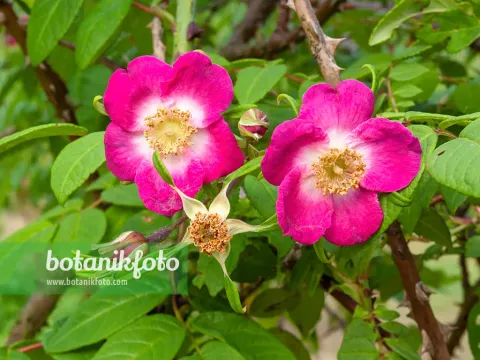
Garland rose
Rosa sertata
The Garland rose (Rosa sertata) is an elegant deciduous shrub belonging to the Rosaceae family. In its natural habitat, this plant grows mainly in the mountainous regions of Central and Western China, preferring open slopes and forest edges.
What the section contains
Garland rose
Successful cultivation of this species requires well-drained, fertile loamy soils with a neutral or slightly acidic pH level. The plant demonstrates high winter hardiness in temperate climates, although it needs protection from strong winds during the first years after planting.
The plant thrives in sunny locations, where soil warmth promotes active root development and abundant flowering. In partial shade conditions, the intensity of the pink petal coloration may decrease, and the shoots tend to become elongated.
Agricultural practices include regular watering during dry periods, especially during the bud formation phase, and moderate fertilization with organic fertilizers. A crucial condition for the bush's health is ensuring good aeration of the root zone.
The economic use of this species is focused on landscape design: the Garland rose is used for creating hedges, rock gardens, and group plantings due to its natural decorative appearance and ability to spread rapidly.
Major threats to the plant's health include fungal diseases such as powdery mildew and black spot, which often occur under conditions of high air humidity. Regular sanitary pruning helps minimize the risk of infection.
Pests typical for most species of the genus Rosa include aphids, rose sawflies, and spider mites. Preventative treatments with insecticides during the spring season significantly improve the plant's viability.