
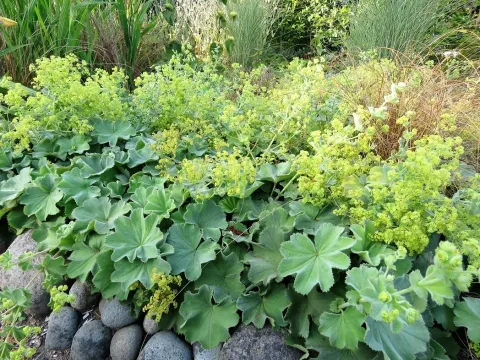
Garden lady's mantle
Alchemilla hybrids
Garden lady's mantle, or Alchemilla hybrida, is a versatile perennial belonging to the Rosaceae family. It is widely recognized for its beautiful, scalloped leaves and delicate, chartreuse flower clusters that add texture to any garden setting.
What the section contains
Garden lady's mantle
The plant thrives in moist, fertile soils with excellent drainage. While it is quite adaptable, it reaches its full potential in partial shade, where the moisture retention of its foliage is most pronounced and visually appealing.
Climatic requirements for this culture are minimal due to its inherent hardiness. It is well-suited for temperate regions, easily surviving cold winters and recovering vigorously in the spring without the need for intensive protective measures.
Basic maintenance involves consistent watering during dry spells and occasional pruning of spent flower spikes to encourage a second flush of foliage. Its robust nature makes it an ideal candidate for low-maintenance landscaping projects.
The primary use of Alchemilla hybrida is in decorative garden design. It serves as an excellent ground cover, border plant, or companion for taller perennials, effectively suppressing weeds and filling empty spaces with lush greenery.
Powdery mildew is the most common fungal disease associated with this plant, especially when planted in areas with poor airflow. Maintaining proper spacing between individual plants is the best preventative strategy.
Pests like aphids may occasionally settle on the tender flower stalks. Routine monitoring and the application of mild insecticidal soaps are typically sufficient to manage these infestations without harming the plant.
Rust fungus can sometimes affect the foliage, particularly during humid seasons. It is essential to remove infected leaves promptly to prevent the spread of spores throughout the planting bed.
Slugs and snails may feed on the foliage during rainy weather. Physical barriers or organic deterrents are recommended to protect the integrity of the foliage for maximum visual impact in the garden.
Root rot remains a potential risk in heavy, waterlogged soils. Ensuring that the planting site has a well-amended, airy substrate prevents this issue and supports long-term plant health.