
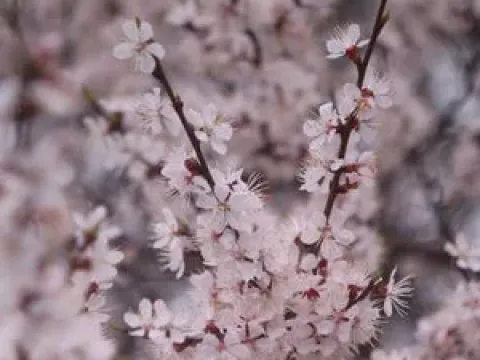
Gansu cherry
Prunus kansuensis
Gansu cherry (Prunus kansuensis) belongs to the Rosaceae family and is native to the mountainous regions of Gansu province in Northwest China. It is a deciduous, hardy species that has evolved to thrive in diverse and challenging environmental conditions.
What the section contains
Gansu cherry
The tree typically grows as a small to medium-sized tree or a large shrub, characterized by high levels of genetic variation. It is widely recognized for its excellent adaptability to soil types, provided that the drainage is adequate.
Climate requirements for this species are centered around its preference for temperate zones with distinct seasonal cycles. It shows remarkable drought tolerance, making it an ideal candidate for cultivation in arid or semi-arid regions.
Regarding soil, it prefers well-drained, nutrient-rich soils with a neutral pH level. It does not tolerate waterlogging, which can cause root rot, so careful site selection is essential for successful establishment.
Agricultural management should include proper pruning techniques to maintain an open canopy. This improves airflow and light penetration, which are vital for healthy growth and consistent development of flower buds.
The primary agricultural use of Prunus kansuensis is as a hardy rootstock for other stone fruit varieties. Its genetic compatibility and resistance to environmental stress make it a valuable resource for nurseries.
The fruit of the Gansu cherry is edible and widely processed into jams, juices, and fermented products. While often tart, it possesses a unique flavor profile that is highly valued in local culinary traditions.
Yield capacity is influenced by tree health, pollination efficiency, and local site conditions. Cross-pollination is often necessary to maximize fruit set, suggesting the benefits of orchard-style planting.
Researchers are actively studying this species to harness its genes for disease resistance and improved climate resilience in modern stone fruit breeding programs.
Harvest management involves careful monitoring of fruit maturity. Given the high nutrient content, the harvest is critical for the production of high-quality derived products.
Typical threats include fungal pathogens such as Monilinia (brown rot) and various leaf spot diseases. Preventive measures such as cleaning up fallen leaves and regular thinning help manage these risks.
Pests commonly affecting this species include aphids, plum curculio, and mites. Integrated Pest Management (IPM) strategies, including biological controls and targeted spraying, are recommended.
Environmental stress, especially sudden spring frosts, can significantly damage flowering tissues. Protective measures, such as orchard heaters or choosing frost-resistant sites, can mitigate these losses.
Healthy orchards require proactive monitoring of both foliage and bark condition. Detecting infestations or diseases early allows for efficient treatment and prevents widespread orchard damage.
Soil management, including organic fertilization and mulch, supports tree vigor. A robust tree is naturally more resistant to the diverse array of pests and diseases prevalent in stone fruit farming.