
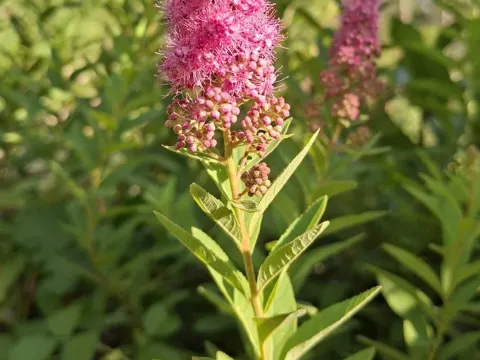
Billard's Spirea
Spiraea billardii
Billard's Spirea (Spiraea billardii) is a hybrid deciduous shrub belonging to the Rosaceae family. It is widely recognized for its impressive tall, pyramidal pink flower spikes that bloom mid-to-late summer, making it a standout feature in any landscape.
What the section contains
Billard's Spirea
Originating as a cross between Spiraea douglasii and Spiraea salicifolia, this plant has inherited the robustness of its parents. It is well-suited for temperate climates, demonstrating excellent hardiness against cold winters and moderate tolerance to urban pollution.
For optimal growth, this species requires a location with full sun to partial shade. While it is adaptable, it thrives best in deep, well-drained, and fertile soils. It is important to ensure the soil maintains consistent moisture, especially during the establishment phase.
Cultural practices include regular pruning, which is essential for maintaining the vigor of the shrub. Since it blooms on new growth, it is recommended to prune the plant in early spring to encourage dense branching and a higher volume of summer flowers.
In landscaping, this shrub is highly valued for its versatility. It is frequently utilized in the creation of informal screens, privacy hedges, and as a backdrop for perennial borders. Its rapid growth rate makes it a favorite among landscape designers.
Billard's Spirea is generally considered a low-maintenance plant, though it can occasionally fall victim to aphids. These pests cluster on succulent stems and undersides of leaves, and can be managed effectively with insecticidal soaps or neem oil.
Powdery mildew may occur when humidity is high and airflow within the shrub is restricted. Providing adequate spacing between plants is the most effective cultural method to prevent this fungal issue and ensure healthy leaf development.
Spider mites can become a problem during hot, dry spells. They cause foliage to appear speckled or bronzed, often accompanied by fine webbing. Regular water rinsing of the foliage can help deter these pests during the peak of the dry season.
Leaf spot diseases, caused by various fungi, can sometimes manifest if the plant is under stress from nutrient deficiencies or poor drainage. Applying fungicides and improving soil conditions are the recommended steps for mitigation.
Overall, monitoring for symptoms and maintaining good sanitary practices, such as removing fallen leaves and pruning dead wood, will significantly reduce the prevalence of both pests and diseases in your garden collection.