
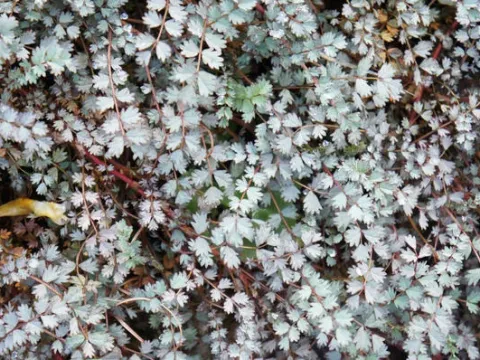
Blue New Zealand burr
Acaena caesiglauca
Blue New Zealand burr (Acaena caesiglauca) belongs to the Rosaceae family. It is a slow-growing evergreen perennial that produces a dense, mat-forming carpet of attractive, glaucous, blue-grey foliage.
What the section contains
Blue New Zealand burr
Native to New Zealand, this plant is naturally adapted to mountain environments, rocky slopes, and well-drained soils. Its habit makes it a premier choice for rock gardens, path edging, and slope stabilization in temperate climates.
Successful cultivation requires soil that is gritty, infertile, and exceptionally well-drained. The plant thrives in full sun, which is essential to maintain the vibrant blue coloration of the leaves and to prevent the plant from becoming leggy or weak.
Watering should be managed carefully; while young plants need consistent moisture to establish their root systems, mature plants are relatively drought-tolerant. Excessive moisture in the winter months is the primary factor that leads to plant failure.
Basic maintenance involves removing weeds in the early stages of establishment. Once the plants form a cohesive mat, they are generally capable of suppressing weed growth on their own, requiring very little human intervention.
The main threats to Acaena caesiglauca are crown rot and root rot caused by poor drainage. Planting on a slight incline or using a sandy, gravel-based soil amendment is the best preventative strategy against these issues.
Slugs and snails can occasionally cause damage to the foliage, particularly during damp, overcast weather. A layer of coarse grit or gravel around the base of the plant acts as a physical barrier that discourages these pests.
Fungal diseases like leaf spot may occur if air circulation is poor or if the plant remains waterlogged. Ensuring that the foliage can dry quickly after rain is key to maintaining healthy growth throughout the growing season.
Winter care is minimal, though in areas with harsh, exposed winters, a light covering of evergreen boughs can help protect the foliage from desiccating winds and excessive freezing-thawing cycles.
Routine thinning every few years helps rejuvenate old patches. This process involves gently pruning or dividing the mats to encourage fresh growth, which keeps the foliage display uniform and vigorous over many seasons.