
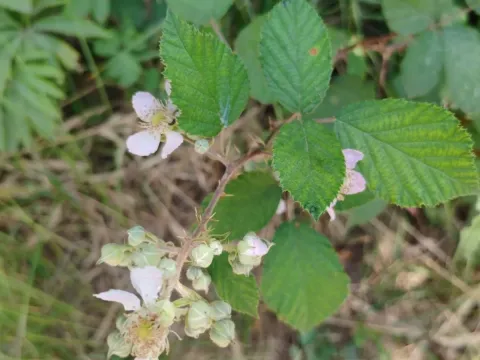
Bifront blackberry
Rubus bifrons
Bifront blackberry, scientifically known as Rubus bifrons, is a member of the Rosaceae family. This perennial shrub is characterized by its vigorous growth habit and distinct morphological traits found within the complex Rubus genus.
What the section contains
Bifront blackberry
The species originates from Europe, where it thrives in forest margins, clearings, and disturbed sites. It is highly adaptable and has naturalized in various regions with a temperate climate.
Cultivation requires exposure to full sunlight to ensure optimal photosynthesis and fruit sugar production. While it can tolerate partial shade, productivity is significantly higher in bright, well-lit environments.
The plant prefers well-drained, fertile soil rich in organic matter. Excessive water retention in the root zone can lead to rot, necessitating the use of raised beds or site selection with excellent drainage.
Management practices include pruning biennial canes after harvest to promote the development of new, high-yielding vegetative growth. Proper training on wires or trellises is recommended to facilitate management.
The yield of Rubus bifrons is influenced by seasonal temperature patterns and availability of water during the fruit development stage. On average, the plant produces medium-sized drupelets with a tart to sweet flavor profile.
Proper nutrient management, specifically the application of balanced potassium and phosphorus fertilizers, significantly enhances the quality and volume of the harvest.
The flowering period typically occurs in late spring, and fruit maturity is achieved over several weeks. Harvesting is usually performed by hand to ensure the berries remain intact and undamaged.
Post-harvest handling is critical as the berries are highly perishable. Rapid cooling and careful storage are required to maintain freshness for transport or local market distribution.
Consistent yield stability depends on maintaining a healthy ratio of current-year primocanes and second-year floricanes, which determines the potential output for the following season.
Rust diseases are common in humid conditions and can cause severe leaf tissue damage. Implementing hygienic practices, such as removing fallen leaves, is vital to mitigate spore spread.
Botrytis fruit rot is a significant challenge in wet summers, impacting the marketability of the crop. Ensuring good airflow within the canopy remains the primary strategy for managing this fungus.
Spider mites are known to infest the foliage during hot, dry spells. Regular inspection of the underside of leaves allows for early detection and targeted management of these pests.
Cane borers can weaken structural stems, leading to branch breakage. Identifying and pruning off stems showing signs of wilting or entry holes is a necessary maintenance task.
Various viral pathogens transmitted by aphids can lead to stunted growth and reduced fruit size. Controlling aphid vectors is essential to maintaining the long-term health of the plantation.