
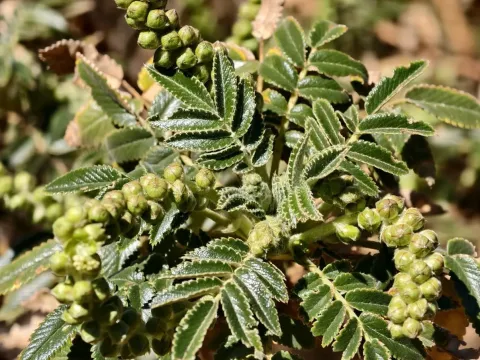
Bencomia
Bencomia
Bencomia is a genus of evergreen shrubs belonging to the Rosaceae family. These plants are native to the Canary Islands, known for their unique adaptation to volcanic and rocky landscapes.
What the section contains

Bencomia
The culture thrives in subtropical climates with moderate maritime influence. In their natural habitat, they are found on slopes where light intensity is high and the air remains relatively humid but well-ventilated.
For cultivation purposes, soil drainage is the most vital factor. Bencomia requires porous, well-draining substrates to prevent root decay, which is the most common cause of failure in domestic gardening.
Once established, Bencomia shows remarkable resilience to drought conditions. However, during the primary growth phase, regular but controlled watering is necessary to support the plant's development without oversaturating the root zone.
Agronomic maintenance is relatively simple, primarily consisting of structural pruning to preserve the plant's aesthetic shape. Due to their slow growth rate, they require minimal fertilizer application compared to other fast-growing agricultural or ornamental crops.
The primary threats to Bencomia health in cultivation are fungal diseases, particularly those resulting from improper soil moisture management or lack of air circulation.
Root rot remains the most significant risk, necessitating the use of sterile, well-draining potting mixes when growing the plant in containers or protected environments.
Pests such as spider mites and mealybugs can pose a threat, especially when plants are kept in greenhouse conditions without sufficient ventilation.
Regular inspection of the foliage is required to identify early signs of infestation and to initiate immediate manual or biological control measures.
Maintaining a clean growing environment and preventing overcrowding of plants helps reduce the incidence of both pathogenic infections and pest outbreaks.