
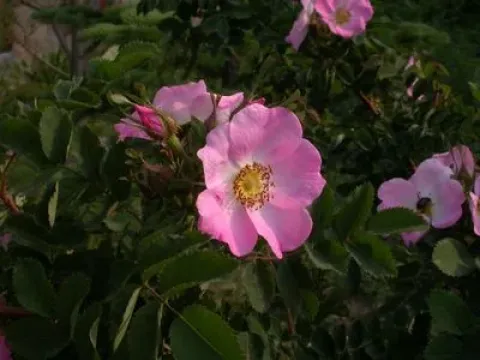
Beautiful Rose
Rosa bella
Rosa bella, commonly known as the Beautiful Rose, is a deciduous shrub belonging to the Rosaceae family. It is native to northern China and is highly regarded in horticulture for its graceful form and attractive display of flowers and hips.
What the section contains
Beautiful Rose
Cultivation success depends on providing a location with full sunlight and good air circulation. The shrub thrives in well-drained, fertile soil, which can range from loamy to sandy textures, provided the pH levels remain within the neutral to slightly acidic range.
The plant demonstrates significant hardiness and can adapt to various climatic conditions within temperate zones. During the initial growth phase, consistent moisture is vital, while mature plants develop a degree of drought tolerance after their root systems are fully established.
General management practices involve annual pruning to remove dead or diseased wood and to maintain the desired shape of the bush. Balanced fertilization applied in early spring helps promote healthy leaf development and boosts the plant's resistance to environmental stress.
Economically, Rosa bella serves as a staple in ornamental gardening. It is frequently employed in public parks and private landscapes for creating informal hedges, borders, or as a specimen shrub, contributing significantly to biodiversity and visual appeal in late summer.
Rosa bella is susceptible to common fungal pathogens, specifically powdery mildew and black spot, which can affect its foliage density. These issues are most prevalent in damp, humid environments where the leaves remain wet for extended periods, preventing evaporation.
Insect pests, including aphids and spider mites, can cause damage to the tender parts of the shrub. Integrated pest management, which includes encouraging beneficial predators and localized application of soap solutions or pesticides, is recommended for long-term health.