
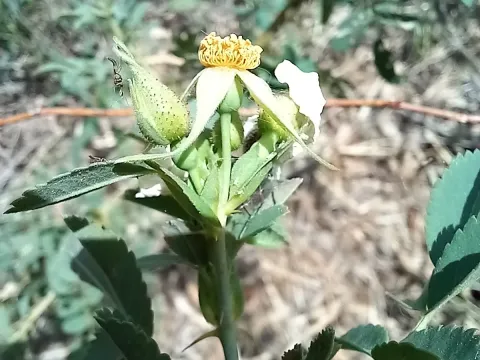
Begger's Rose
Rosa beggeriana
Sowing seeds of Rosa beggeriana is typically performed in the autumn, allowing the seeds to undergo natural stratification in the soil throughout the cold winter months.
What the section contains
Begger's Rose
If seeds are stored dry, they require a cold stratification process at temperatures between 0 and 5 degrees Celsius for 3 to 4 months before spring sowing.
Seeds should be planted in prepared beds at a depth of 2 to 3 centimeters, with adequate spacing between rows to facilitate efficient field maintenance and irrigation.
When propagating via cuttings or nursery-raised seedlings, the optimal planting time is early spring before bud break or in the autumn during leaf drop.
Choosing an appropriate site is crucial, as this species demands full sunlight to thrive and will struggle or produce fewer flowers if planted in shaded areas.
Begger's Rose belongs to the Rosaceae family and is recognized as a hardy, deciduous shrub capable of adapting to diverse and challenging environments.
The plant performs best in well-drained loamy or sandy soils, demonstrating high tolerance to neutral or slightly alkaline soil conditions common in arid regions.
It is noted for its high drought tolerance and winter hardiness, making it an excellent choice for environmental restoration and landscaping in cold climates.
While the plant is tough, supplemental watering during the peak growing season will help maintain vitality and improve the quality of fruit development.
Avoid planting in areas prone to waterlogging, as the root system is sensitive to poor drainage, which can increase the risk of fungal infections.
The yield of Begger's Rose depends significantly on the age of the shrubs, planting density, and the implementation of effective pruning techniques.
The shrub produces a high quantity of small, nutrient-rich hips that are highly valued for their concentration of vitamins and bioactive compounds.
Consistent annual yields can be achieved by removing old, unproductive wood and encouraging the growth of vigorous new canes during the dormant season.
Full production capacity is typically reached within 5 to 10 years of establishment, assuming the plants receive sufficient nutrients and are free from severe competition.
Careful field management and weed control are essential factors that prevent resource competition and ensure the maximum possible harvest per hectare.
Powdery mildew is a common concern, particularly in environments with high humidity or stagnant air circulation, which can stress the shrub and reduce leaf health.
Rust diseases are also known to impact this species, appearing as spots on the foliage and potentially causing premature leaf drop if left untreated.
Insect pests, such as aphids and leaf rollers, frequently target the succulent new growth and flower buds during the spring and early summer months.
Integrated pest management, including the use of biological control agents and good sanitation practices, is the most effective way to manage these threats.
Pruning out diseased stems and removing fallen leaf litter during the autumn significantly helps in reducing the overwintering population of various pathogens.
Harvesting usually occurs in late summer or early autumn when the rose hips are fully mature, firm, and exhibit a vibrant orange or red coloration.
Manual harvesting is the standard method, which requires the use of protective gear, such as heavy-duty gloves, to mitigate risks from the plant's sharp thorns.
After collection, the hips should be kept in thin layers to prevent overheating and fermentation before they are transferred to the drying facility.
Drying is conducted at controlled temperatures, usually below 60 degrees Celsius, to preserve the chemical integrity of the fruit's nutritional components.
Once dried, the product should be stored in moisture-proof containers in a cool, dark place to maintain shelf life and prevent contamination or mold growth.