
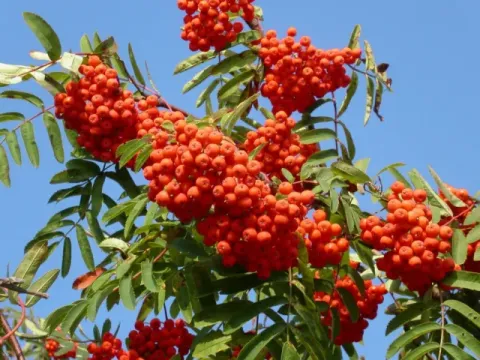
Sorbus hybrids
Sorbus hybrids
Planting Sorbus hybrids is best performed during the dormant season, specifically in early spring before bud break or late autumn after leaf fall. Choosing the right timing is essential for successful root establishment.
What the section contains
Sorbus hybrids
Site selection should prioritize full sun exposure to ensure optimal fruit sugar content and robust tree development. Avoid locations with heavy, waterlogged soils which can lead to root rot issues.
When preparing the planting site, incorporate compost or well-rotted manure to improve soil fertility. Dig a hole wide enough to accommodate the root system comfortably without bending the roots.
Ensure the root collar is planted at the exact same depth as it was in the nursery container. Planting too deeply can cause bark decay, while planting too shallowly may leave roots vulnerable to drying out.
After planting, apply a generous amount of water to settle the soil around the roots. Mulching the area helps retain moisture and prevents the growth of weeds that compete with the young tree.
Sorbus hybrids belong to the Rosaceae family and exhibit high tolerance to diverse environmental conditions. They prefer deep, well-draining loam soils with a neutral or slightly acidic soil pH balance.
These trees require regular pruning to maintain an open canopy. An open center structure improves airflow and light penetration, which is vital for reducing humidity levels within the foliage.
While mature trees are quite drought-tolerant, young specimens require consistent watering during the first few growing seasons. Supplemental irrigation is crucial during prolonged dry spells in summer.
Fertilization should be balanced; nitrogen is beneficial in early spring to support leaf growth, while phosphorus and potassium are essential for fruit development and hardening off before winter.
Site sanitation is an important requirement for long-term health. Regularly removing dead or diseased wood prevents the accumulation of fungal spores and keeps the tree structurally sound.
Hybrid rowan trees typically reach the stage of fruit bearing within 3 to 5 years after planting. Yield potential significantly increases as the tree matures, with peak production occurring after the first decade.
For maximum fruit set, it is advisable to plant multiple varieties to facilitate cross-pollination. This practice increases the number of berries per cluster and enhances the overall fruit size.
Sorbus hybrids are developed to combine the hardiness of wild rowans with improved culinary traits. The resulting fruit is often sweeter, larger, and more palatable for both fresh consumption and processing.
Proper management of the orchard floor and adequate nutrient supply directly correlate to higher yields. Trees that receive balanced fertilization and minimal weed competition produce consistent annual crops.
Harvesting should occur when the berries have achieved their full color and a slightly softened texture. Careful handling is necessary to prevent bruising of the fruit during the collection process.
The rowan moth is a primary pest that can cause significant damage by boring into the fruit. Integrated pest management, including the use of pheromone traps, is recommended to mitigate these effects.
Fungal diseases like apple scab can affect the leaves and fruit, especially during wet springs. Fungicidal treatments should be applied preventatively if the local climate is known to be humid.
Aphids can colonize new growth, causing leaf curling and reduced plant vigor. Early detection and the use of horticultural oils can help manage populations before they become an infestation.
Rust is another potential threat, often manifesting as orange spots on the foliage. Maintaining healthy soil conditions and ensuring good air circulation help minimize the risk of disease spread.
- Rowan moth
- Aphids
- Apple scab
- Rust
- Scale insects