
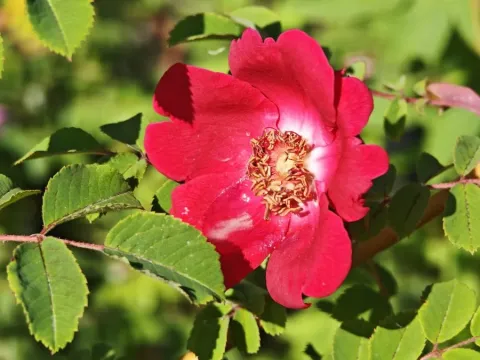
Pruhonice Rose
Rosa pruhoniciana
The Pruhonice Rose (Rosa pruhoniciana) is a distinctive member of the Rosaceae family. Originating from the Prahonice dendrological garden, this hybrid cultivar is recognized for its ornamental value and strong growth habits.
What the section contains
Pruhonice Rose
This shrub requires a location with full sun exposure to thrive. Adequate light is essential for robust stem development and ensures the plant reaches its full potential during the flowering season.
The ideal soil for this rose is well-draining, nutrient-rich loam. While it tolerates various soil types, consistent moisture levels and good aeration in the root zone are crucial for long-term survival.
Cultural practices include deep watering during dry spells, particularly in the spring and summer. Applying mulch helps maintain soil temperature and moisture levels throughout the growing season.
Annual pruning is necessary to maintain the shape of the shrub and remove dead wood. By pruning correctly, gardeners can encourage healthier growth and more abundant blooms in the following year.
Like many species in the genus, this rose is susceptible to common fungal pathogens, including black spot and powdery mildew, especially in regions with high humidity or poor air circulation.
Insect pests such as aphids and leaf-eating beetles can cause significant damage to the foliage. Monitoring the plant regularly is essential to identify infestations at an early stage.
Management involves applying appropriate fungicides if symptoms of fungal infection appear. Integrated pest management strategies are recommended to reduce reliance on chemical sprays.
Maintaining a clean garden environment by clearing debris beneath the rose bushes helps break the life cycle of many common diseases and pests that overwinter in fallen leaves.
Always ensure that tools are kept sharp and clean to prevent mechanical damage to the stems, which can act as entry points for pathogens and opportunistic diseases.