
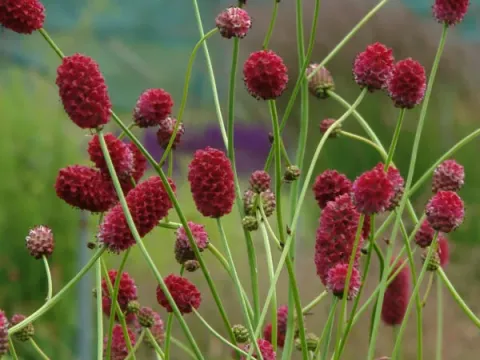
Sanguisorba hybrids
Sanguisorba hybrids
Sowing of Sanguisorba hybrids is most successful when performed in early spring or late autumn. Autumn sowing is highly recommended as it allows the seeds to undergo natural stratification during the winter months, which significantly improves germination rates in the spring.
What the section contains
Sanguisorba hybrids
Seeds should be sown at a depth of 1 to 2 centimeters in well-prepared, friable soil. In forage mixtures, seed density should be carefully managed to prevent the young Sanguisorba plants from being outcompeted by more aggressive grasses during their slow initial growth phase.
After sowing, it is essential to roll the soil surface to ensure good seed-to-soil contact. This practice promotes capillary water movement, which is critical for successful emergence, especially in fields with suboptimal moisture conditions during the spring season.
The first year of cultivation is focused on establishing a healthy root system. Growers should avoid excessive weeding disturbances and prioritize the removal of invasive weeds that may shade the slow-growing seedlings during their establishment period.
Using certified seed lots with high purity and viability is a prerequisite for a uniform stand. Pre-sowing treatment with organic growth stimulants can further support the development of lateral roots, ensuring the crop can withstand the stresses of the first growing season.
Sanguisorba hybrids belong to the Rosaceae family and are known for their strong adaptation to various environments. They perform best in fertile, well-drained loamy soils with a neutral or slightly acidic pH level, which ensures optimal nutrient uptake.
The crop is highly resilient to diverse climatic conditions, demonstrating excellent cold tolerance and winter hardiness. While it can withstand moderate drought once established, adequate water supply during the peak growing season is necessary to maximize biomass production.
As light-demanding plants, they thrive in open areas with full sun exposure. However, they maintain acceptable productivity in partially shaded conditions, making them versatile for integration into various landscape and agricultural systems.
Fertilization regimes should be based on soil testing results, with a primary focus on phosphorus and potassium to strengthen the root structure. Proper nutrition ensures longevity of the plant stand, allowing it to remain productive for several years without needing reseeding.
Agrotechnical maintenance includes periodic cultivation between rows to maintain soil aeration and moisture retention. This is particularly important in the early years of the crop, as a well-aerated soil structure facilitates the development of deep, effective root systems.
Sanguisorba hybrids serve several agricultural and industrial purposes, including high-quality fodder production, medicinal raw material extraction, and soil erosion control. The aerial parts of the plant are rich in proteins and vitamins, making them excellent for hay mixtures.
Biomass yield depends heavily on the frequency of harvesting and the overall fertility of the site. A two-cut system is typically optimal, allowing for steady growth while preserving the nutritional profile of the harvested fodder for livestock consumption.
The roots of Sanguisorba are valued for their high tannin content and medicinal properties. Harvesting these underground organs requires careful timing, typically after 3–4 years of plant growth, to ensure that the yield of bio-active compounds is at its peak.
In environmental management, these hybrids play a crucial role in preventing soil erosion. Their extensive root systems stabilize slopes and improve soil structure, contributing to long-term sustainability of land used for pasture or conservation purposes.
The perennial nature of this crop offers high economic potential by reducing the costs associated with annual soil preparation and replanting. With proper management, Sanguisorba stands can maintain consistent yields, proving to be a reliable component in sustainable farming.
While generally resistant to many pests, Sanguisorba hybrids may occasionally suffer from fungal diseases such as leaf spots or rust, particularly in seasons with high humidity. Ensuring good air circulation within the stand is the primary method of prevention.
Insect pests such as aphids rarely reach economic injury levels but should be monitored during the early spring growth. Integrated pest management strategies, focusing on biological controls, are preferred to maintain the quality of the harvested biomass for animal feed.
Root diseases are primarily associated with waterlogged soils. Maintaining proper soil drainage and adhering to crop rotation schedules significantly reduces the prevalence of soil-borne pathogens that might compromise the plant's long-term health.
Fostering a healthy ecosystem around the plantation, including natural predators of potential insect pests, creates a self-regulating environment. This approach minimizes the necessity for chemical interventions and supports organic farming standards.
In cases of severe infestation, targeted applications of fungicides or insecticides may be necessary. However, strict adherence to pre-harvest intervals is mandatory to ensure that the medicinal or forage quality of the product remains safe for end-users.
Harvesting for fodder is best timed at the onset of flowering, as this period offers the best balance between biomass quantity and nutritional density. Rapid drying after cutting is essential to prevent nutrient leaching and maintain quality.
Root harvesting for medicinal purposes is conducted in late autumn, once the aerial parts have withered. This timing ensures that all carbohydrates and beneficial compounds are sequestered within the roots, resulting in the highest quality herbal product.
For seed production, harvesting must be managed carefully as seeds are prone to shattering. The process should begin as soon as the seed heads show signs of maturation, using appropriate machinery to reduce losses and maintain high seed viability.
Post-harvest handling of seeds includes cleaning and drying to reach a moisture content of 10–12 percent for safe storage. A cool, dry environment is crucial to maintain high germination capacity for the upcoming sowing season.
Following the final harvest of the season, light harrowing helps incorporate remaining organic matter into the soil and promotes plant regeneration. This simple agrotechnical practice ensures faster regrowth in the subsequent spring and strengthens the overall stand.