
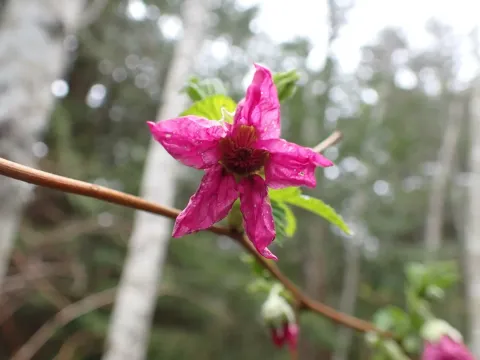
Salmonberry
Rubus spectabilis
Salmonberry (Rubus spectabilis) is a deciduous shrub in the Rosaceae family, native to the western coastal regions of North America. It spreads through underground rhizomes, making it a prolific colonizer in its natural habitat.
What the section contains
Salmonberry
Propagation is typically done through division of suckers or root cuttings in the early spring or late autumn. Seeding is less common and requires a cold stratification period to break dormancy and ensure germination.
When planting, ensure the site allows for root expansion. This plant can be aggressive; therefore, it is advisable to plant it in controlled garden beds or areas where its spread can be managed easily without invading other zones.
Young plants should be spaced at least 1-1.5 meters apart to allow for proper airflow and development. This spacing helps prevent the overcrowded growth that often invites foliage diseases in damp climates.
Initial establishment requires consistent moisture. Once the root system is well-settled in its second year, the shrub becomes more resilient, although it continues to thrive best in moist, well-draining soil conditions.
Salmonberry requires a cool, temperate climate and is highly shade-tolerant. It thrives in partially shaded spots where it is shielded from the harsh afternoon sun, which can scorch its delicate leaves.
The soil should be rich in organic matter, acidic to neutral in pH, and constantly moist but never waterlogged. Incorporating compost or leaf mold into the planting hole enhances water retention and soil fertility.
Mulching is essential for this species. Applying a thick layer of organic material around the base keeps the root zone cool, suppresses weed growth, and provides the necessary nutrients as the mulch decomposes.
While the plant is hardy, it benefits from protection in areas with extreme frost. Providing a light cover or choosing a sheltered site protected from cold, desiccating winds will preserve the vitality of the canes.
Regular maintenance involves thinning out old, unproductive canes after the harvest. This encourages the growth of new, vigorous stems that will produce a more abundant crop in the following season.
The fruit of the salmonberry is a large, raspberry-like aggregate berry that ripens from yellow to deep red. While typically consumed raw, they have a milder, less sweet flavor compared to common garden raspberries.
Productivity is moderate, with mature shrubs capable of yielding a decent harvest during their peak season in late spring to early summer. Fruit production is most reliable in plants aged three to eight years.
The berries are extremely soft and have a very short shelf life. They are best harvested and consumed immediately, making them an ideal crop for home gardeners rather than commercial long-distance shipping.
Yields can be maximized by ensuring the plant has adequate water during the fruit-swelling stage. Stress due to drought often leads to smaller, crumbly berries that lack the desired juiciness.
Although often treated as a wild food, selecting site-specific varieties or maintaining healthy garden soil can lead to larger berries. The fruit is highly valued for its antioxidant content and unique culinary profile.
Like many members of the Rubus genus, salmonberry can be susceptible to fungal issues such as powdery mildew and cane blight. Proper site selection with good air circulation is the best preventive measure.
Root rot is the primary danger if the soil is poorly drained. Avoiding excessive irrigation and ensuring the root zone is not sitting in stagnant water are critical steps to prevent this fatal condition.
Pests like aphids and spider mites can infest the foliage, particularly during dry spells. Keeping the plant vigorous through proper watering and occasional gentle washing of leaves can help mitigate these infestations.
Wildlife, especially birds, can pose a significant challenge during the harvest period. Using netting over the bushes is an effective way to protect the ripening berries until they are ready to be picked.
Sanitation is key to disease management. Removing and destroying any infected canes or leaves immediately prevents the spread of pathogens throughout the patch and maintains overall plant health.
The harvest period is brief and requires frequent picking. Berries should be harvested when they pull away easily from the receptacle, indicating they are fully ripe and at their peak flavor and texture.
For the best quality, pick berries in the early morning while they are still cool. Avoid harvesting during or immediately after rain, as moisture significantly accelerates spoilage and fungal growth on the fruit.
Due to the fragile nature of the berries, use shallow containers for harvesting. Layering them too deeply will crush the bottom fruit and result in a loss of quality even within a short period.
If not eaten fresh, salmonberries can be preserved through freezing. Spread the clean, dry berries on a tray to freeze individually before transferring them to bags, which helps maintain their shape and flavor.
The berries are excellent for making jellies, jams, and syrups. Their distinct, subtle taste complements other berries, and their high water content makes them a wonderful base for refreshing summer drinks.