
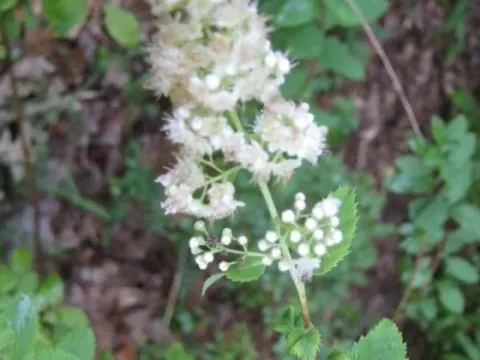
Sargent's spirea
Spiraea sargentiana
Sargent's spirea (Spiraea sargentiana) is a deciduous shrub belonging to the Rosaceae family. It originates from the high-altitude mountain regions of China, particularly in the Sichuan and Hubei provinces, making it well-adapted to cooler temperate climates.
What the section contains
Sargent's spirea
The botanical structure of the shrub is characterized by spreading, arched branches that grow up to 2-3 meters in height. Its foliage is lance-shaped and dark green, providing a dense backdrop for its characteristic clusters of white, corymbose flowers that appear in late spring.
Cultivation requires fertile, well-draining soil with a neutral to slightly acidic pH. The plant thrives in full sun, although it can tolerate partial shade, which may slightly reduce the density of its flowering. It is essential to ensure that the site does not have standing water.
Watering requirements are moderate; the plant prefers consistent soil moisture but is relatively drought-tolerant once established. Mulching around the base is recommended to help retain soil moisture and regulate ground temperature during extreme weather.
In landscaping, Sargent's spirea is highly valued for its naturalistic look. It is often used in shrub borders, informal hedges, or as a focal point in cottage-style gardens due to its elegant form and low-maintenance nature.
Sargent's spirea is susceptible to common garden pests such as aphids, spider mites, and leaf rollers. Early detection through regular visual inspections of the undersides of the leaves is critical for effective management.
Powdery mildew represents the most frequent fungal challenge, appearing as a dusty white substance on leaves. This condition is often exacerbated by stagnant air and high humidity, which emphasizes the need for proper spacing during planting.
Cultural control measures, including the removal of dead or crossing branches, help maintain good airflow through the plant structure. This practice is vital for reducing the risk of fungal infections and maintaining plant vigor.
Chemical intervention may be necessary if infestations become severe. Integrated pest management practices, such as using insecticidal soaps for aphids or specific fungicides for mildew, are recommended to minimize environmental impact.
Regular fertilization with balanced nutrients during the growing season helps the shrub resist physiological stress and recover faster from incidental pest damage or environmental fluctuations.