
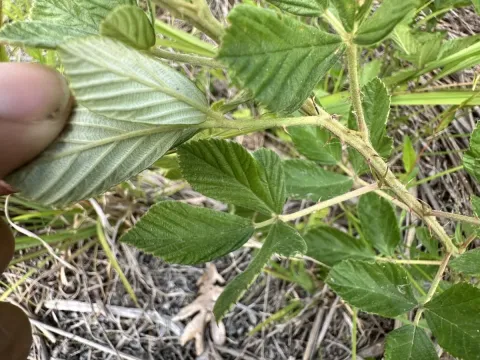
Sand blackberry
Rubus cuneifolius
The Sand blackberry (Rubus cuneifolius) is a perennial shrub belonging to the Rosaceae family. Native to the eastern United States, this species is known for its resilience and ability to thrive in sandy and well-drained soil types.
What the section contains
Sand blackberry
Morphologically, the plant features erect or arching stems that are densely covered in prickles. The leaves exhibit a distinct wedge-shaped (cuneate) base, which serves as a key identifying characteristic for the species within the Rubus genus.
The crop requires full sun exposure to achieve optimal fruit development. While it is naturally drought-tolerant, supplementary irrigation during the fruit-setting stage significantly increases the overall yield and berry size.
Cultivation success depends on choosing soils with excellent drainage, as the root system is susceptible to crown rot in waterlogged conditions. A slightly acidic soil environment is considered ideal for nutrient uptake and long-term plant health.
Agricultural management involves annual pruning to remove spent floricanes. This practice maintains plant vigor, improves air circulation within the canopy, and simplifies the harvesting process for the grower.
Common phytopathological issues include orange rust and various leaf spot fungi. Maintaining proper plant spacing and ensuring good ventilation are essential cultural practices to prevent the spread of fungal infections in commercial plantings.
Insect pests, including aphids and gall makers, can affect plant growth. Integrated pest management strategies, such as biological control or targeted applications of soft pesticides, are recommended to protect the integrity of the berry yield.
Harvesting usually occurs mid-to-late summer. Growers should pick the fruits when they are fully dark and slightly soft to the touch, ensuring the best flavor profile for fresh consumption or processing.
The berries are valued for their use in jams, jellies, and desserts. Their firm texture makes them suitable for commercial distribution, provided they are cooled properly immediately after the harvest to preserve freshness.