
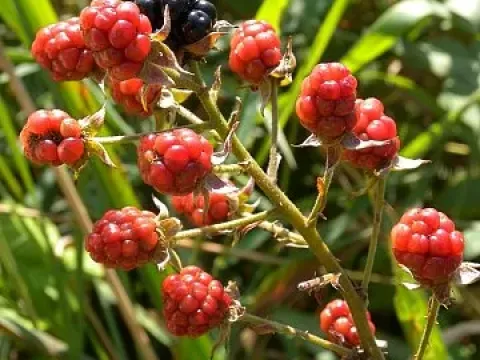
Sawtooth blackberry
Rubus argutus
The sawtooth blackberry (Rubus argutus) is a member of the Rosaceae family. It is a robust perennial shrub indigenous to North America, known for its vigorous growth habits.
What the section contains
Sawtooth blackberry
This species thrives in full sun but adapts well to partially shaded environments, often colonizing disturbed sites and forest edges where soil conditions are favorable.
Ideal soil requirements include well-drained, slightly acidic loam that is rich in organic matter to support the plant's expansive root system during the growing season.
The botanical structure consists of erect to arching canes covered in sharp thorns and serrated leaflets, which are the distinguishing features of this particular species.
The crop is highly valued for its ecological role as a source of nectar for pollinators and as a food supply for diverse wildlife in its natural habitat.
Rubus argutus is susceptible to several fungal diseases, particularly anthracnose and orange rust, which can severely impact the health of the canes.
Common pests include the blackberry mite and various species of cane borers, which can cause significant structural damage to the stems of the bushes.
Managing disease pressure involves regular pruning of old and infected wood to ensure proper air circulation and sunlight penetration throughout the plant canopy.
Monitoring for insect activity should begin early in the spring, as timely intervention is critical to prevent outbreaks that could compromise the seasonal yield.
Integrated pest management strategies are highly encouraged to minimize chemical reliance and preserve the local ecosystem within the berry orchard.
Harvesting the sawtooth blackberry requires patience, as the fruit ripens progressively throughout the summer months depending on the specific location.
Pickers should look for berries that are fully black, plump, and yield slightly to the touch, ensuring the best flavor profile for fresh consumption or processing.
Early morning harvests are recommended to take advantage of cooler temperatures, which helps maintain the structural integrity of the berries during storage.
Using shallow, ventilated crates prevents the fruit from bruising, as the soft tissue of the blackberry is highly sensitive to pressure and heat.
Post-harvest handling should prioritize rapid cooling to preserve the sugar content and shelf life of the berries before they reach the consumer market.