
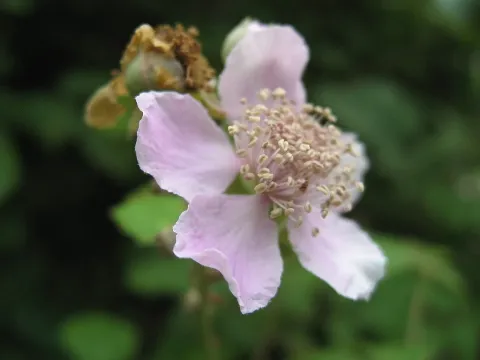
Elm-leaf blackberry
Rubus ulmifolius
The Elm-leaf blackberry (Rubus ulmifolius) is a perennial semi-shrub belonging to the Rosaceae family. In commercial cultivation, propagation is primarily performed vegetatively through root cuttings or tip layering to maintain the specific traits of the selected variety.
What the section contains
Elm-leaf blackberry
Planting is best carried out in the autumn or early spring before the active sap flow begins. Autumn planting is preferred in temperate climates to allow for root establishment before the onset of the summer heat.
When establishing a plantation, a proper layout is crucial given the vigorous nature of the stems. Spacing between plants should be approximately 1.5 to 2 meters, with row widths of at least 2.5 meters to ensure adequate airflow and operational space.
Before planting, the soil should be prepared by incorporating organic matter into the planting pits. This provides the necessary nutrients for the initial growth stage of the young blackberry canes.
While seed propagation is possible, it is rarely used in farming because it does not guarantee the consistency required for commercial fruit production, making vegetative propagation the industry standard.
This species thrives in sunny, sheltered locations with protection from strong cold winds. Inadequate sunlight leads to poor fruit development and reduced sugar content, significantly impacting the final quality of the harvest.
Rubus ulmifolius prefers well-drained, fertile soils with a neutral or slightly acidic pH. Avoiding waterlogged areas is essential, as saturated soil often causes root rot and severely weakens the plant's structural integrity.
A trellis system is a mandatory component of agricultural management for this species. Given its long, arching stems, proper training onto wires is necessary to prevent ground contact, improve ventilation, and facilitate efficient harvesting.
Consistent irrigation is vital, particularly during the flowering and fruit development phases. Efficient water management, often provided by drip irrigation, is key to preventing undersized berries during dry spells.
Annual pruning is a critical maintenance practice. The removal of two-year-old canes that have already fruited promotes the growth of vigorous new stems, which are essential for sustained yields in subsequent seasons.
The yield of the Elm-leaf blackberry is largely determined by diligent management and environmental conditions. With proper care, mature plants can provide a substantial crop of high-quality, flavorful berries.
The fruit is highly versatile and used widely for fresh consumption, as well as in the food industry for juices, jams, preserves, and winemaking. The berries are noted for their high nutritional value and antioxidant content.
Ensuring a high yield requires proper pollination, which can be supported by encouraging pollinating insects near the plantation. Reducing weed competition also allows the plant to direct energy toward fruit development.
Beyond fruit production, Rubus ulmifolius is often utilized for its robust habit as a dense, thorny hedgerow, serving as a natural barrier on agricultural properties.
The leaves of the plant are also recognized for their high tannin content, finding niche applications in herbal medicine and the production of traditional infusions.
Key diseases affecting Rubus ulmifolius include anthracnose, powdery mildew, and blackberry rust. Proactive management involves maintaining proper spacing for airflow and applying copper-based fungicides when necessary.
Pests such as the blackberry mite, aphids, and various weevils can cause significant damage to the plant's vegetative parts and developing fruit, necessitating an integrated pest management approach.
Regular sanitation of the field is crucial; removing fallen leaves and pruning debris helps disrupt the life cycles of pathogens and overwintering pests, significantly reducing infection pressure in the following year.
Monitoring the plantation for early signs of infestation allows for targeted interventions, minimizing the need for broad-spectrum chemical applications and supporting sustainable production goals.
Integrating biological controls and maintaining healthy soil conditions helps plants build natural resilience against common diseases, ensuring a longer productive lifespan for the plantation.
Harvesting the Elm-leaf blackberry is a labor-intensive process, as fruits do not ripen simultaneously. Multiple picking sessions over several weeks are required to ensure that all berries are harvested at peak maturity.
Picking should ideally occur in the early morning hours once the dew has evaporated. This practice maximizes the shelf life and quality of the fruit, ensuring it remains firm during transport to the market.
Using shallow containers with adequate ventilation is essential to prevent fruit bruising and the accumulation of moisture, which can lead to rapid decay post-harvest.
Grading the fruit during the harvest process allows growers to separate berries based on size and ripeness, which maximizes their market value and appeal to consumers.
Post-harvest care involves cleaning the site and applying late-season fertilizers to support the plant's transition into dormancy, ensuring a strong start for the following season.