
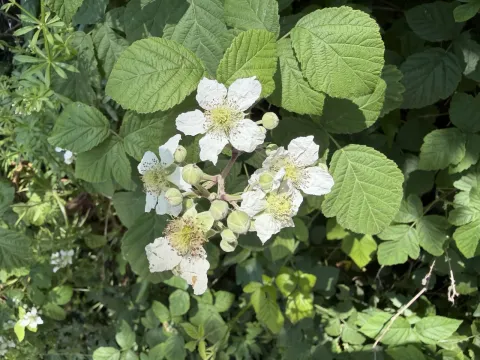
Early blackberry
Rubus praecox
Early blackberry (Rubus praecox) belongs to the Rosaceae family. This perennial shrub is recognized for its accelerated growth cycle compared to traditional late-ripening varieties, allowing for an earlier harvest season.
What the section contains
Early blackberry
Propagation is typically performed vegetatively through tip layering, division of the rootstock, or root cuttings. Planting is best undertaken in early spring before active sap flow or in late autumn, ensuring the plant has enough time to establish before freezing temperatures.
The use of a trellis system is essential for commercial blackberry production. Training the canes along wires keeps the fruit off the ground, improves air circulation, and makes harvesting and maintenance much more efficient.
Spacing between plants should be approximately 1.5 to 2.5 meters, depending on the vigor of the specific clone. Row spacing of 2 to 3 meters is recommended to allow for easy access of equipment and adequate sunlight penetration.
Proper soil preparation, including deep tilling and the addition of organic matter like compost, is critical. A well-structured soil with good drainage ensures the long-term health and productivity of the root system.
Early blackberry thrives in sunny locations protected from strong winds. Full sun exposure is vital to maximize fruit sugar levels and ensure the proper ripening of the berries throughout the season.
The plant prefers fertile, well-draining loamy or sandy soils with a slightly acidic pH (5.5–6.5). It is crucial to avoid low-lying areas where water may stagnate, as excessive moisture leads to root rot.
Consistent moisture is key, particularly during fruit set and berry development. Drip irrigation systems are the most effective method for maintaining ideal water levels while minimizing leaf wetness and disease pressure.
Fertilization should be balanced according to the plant's growth stage. Spring applications of nitrogen support vigorous vegetative growth, while phosphorus and potassium-rich fertilizers applied later help improve fruit quality.
In cooler climates, winter protection is necessary. Canes should be removed from the trellis, gently bent toward the ground, and covered with breathable frost blankets to prevent winter injury to the dormant buds.
High yields depend on rigorous pruning practices. Since the fruit is borne on second-year canes (floricanes), removing the old, dead canes immediately after harvest is essential for the plant’s health and next season's output.
Under optimal cultivation conditions, yields can reach 10–15 tons per hectare. Pollination is a major factor; maintaining a healthy population of bees during the flowering period significantly improves crop uniformity.
Harvesting is performed in multiple stages as the fruit ripens. The berries are highly perishable, and the final yield quality relies heavily on quick post-harvest cooling to preserve the structural integrity of the fruit.
Blackberries are highly versatile in their use, including fresh market consumption, frozen packs, or industrial processing for juices, jams, and jellies. The fruit is valued for its high antioxidant and anthocyanin content.
Regular thinning of the canopy is required to maintain airflow, which prevents the development of fungal diseases and ensures that the ripening fruit receives adequate sunlight.
Common fungal threats include anthracnose, rust, and septoria leaf spot. These can be managed through regular monitoring and the application of appropriate copper-based or systemic fungicides during the dormant season.
Pests such as blackberry mites and weevils can cause significant damage to the crop. Integrated pest management (IPM) strategies, including early detection and targeted insecticide use, are necessary to prevent severe infestations.
Crown gall is a persistent bacterial disease that cannot be treated. Infected plants must be immediately removed and destroyed to prevent the spread of the bacteria through the soil or pruning tools.
Powdery mildew often occurs in conditions with high humidity and significant temperature fluctuations. Maintaining proper plant spacing and airflow through the trellis is the best preventative measure against this pathogen.
Aphids are not only direct pests but also major vectors for various viral diseases. Controlling ants that protect aphid colonies is a key component in a comprehensive crop protection program.
The harvest season for early blackberry is relatively short, requiring efficient coordination of labor. Berries should be picked during the dry morning hours after dew has evaporated to ensure the highest storage quality.
Quick cooling immediately after picking is mandatory. Berries should be transported to cold storage at 2–4 degrees Celsius to halt the ripening process and inhibit the development of mold, extending shelf life significantly.
Picking into shallow containers prevents the crushing of berries. Careful handling during the sorting process is essential to remove any damaged or overripe fruit, ensuring that only top-quality produce reaches the market.
Logistics planning is critical for large-scale operations. Ensuring that harvested fruit is transported to cooling facilities within an hour or two of picking makes a dramatic difference in market value and waste reduction.
Consistent sorting protocols at the time of harvest help maintain quality standards, allowing producers to effectively grade the fruit for different market tiers based on size, color, and firmness.