
Esserteau Rowan
Sorbus esserteauana
Description
Growing requirements
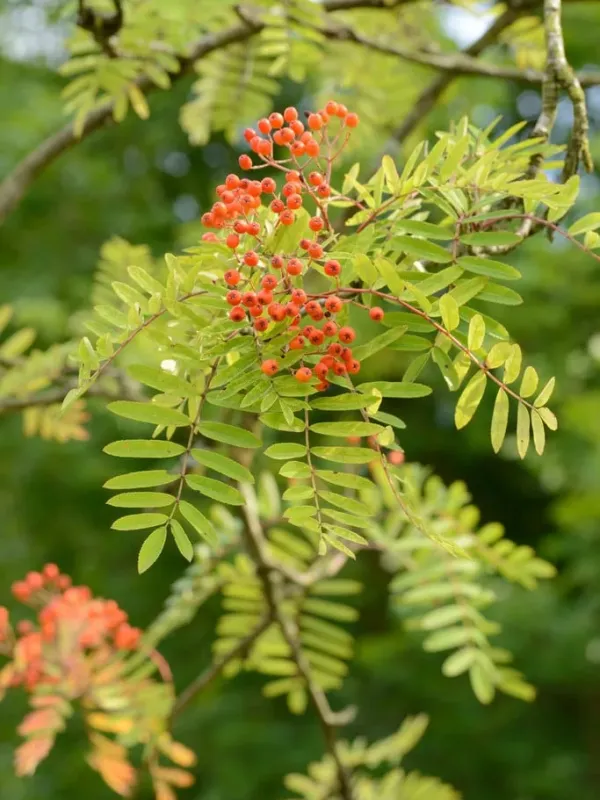
Sorbus esserteauana, commonly known as Esserteau Rowan, belongs to the family Rosaceae. It is a stunning deciduous tree known for its pinnate foliage and large clusters of red-orange berries.
This species is native to Western China, where it grows in mountain regions. It is widely prized by botanists and gardeners for its elegant growth habit and excellent performance as an ornamental landscape tree.
The tree thrives in moist but well-drained, fertile soil. It performs best in full sun or light shade, showing good adaptability to various garden soil types provided they are not waterlogged.
Cultural practices include ensuring regular watering during the first few years of establishment. Mulching around the base helps retain moisture and provides the root zone with organic nutrients as the mulch decomposes.
Pruning should be minimal, focusing on removing dead or crossing branches to maintain a healthy structure. This tree is relatively hardy and can withstand moderate frost without special protection.
Main diseases and pests
Fire blight is the most serious threat to Sorbus esserteauana, a bacterial disease that can cause sudden wilting and blackening of branches. Strict sanitation is essential for managing this issue.
Aphids can infest the new growth during spring, causing leaf curling. While usually not fatal, heavy infestations can weaken the tree, making it susceptible to other opportunistic pathogens.
Sawfly larvae may feed on the leaves, occasionally leading to significant defoliation if left untreated. Integrated pest management, including natural predators, is recommended for controlling these populations.
Powdery mildew may occur in poorly ventilated areas or during periods of high humidity. Improving airflow through correct spacing and thinning can significantly reduce the incidence of this fungus.
Regular monitoring of bark condition is necessary to detect signs of scale insects or borers, which can be detrimental if allowed to damage the cambium layer of the tree.