
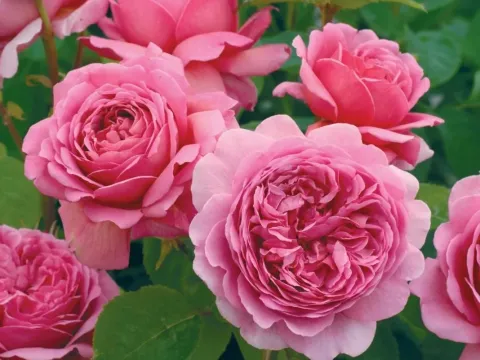
English rose
Rosa english
The English rose belongs to the Rosaceae family. Developed by David Austin, these roses are recognized for their distinct shrub habit, repeat flowering, and strong fragrance, which distinguish them from hybrid teas.
What the section contains
English rose
Successful cultivation requires a location with full sun exposure, although some varieties can tolerate partial shade in hotter climates. Adequate air circulation is crucial to prevent fungal infections and promote healthy growth.
The soil should be nutrient-rich, loamy, and well-draining. Enriching the planting site with compost or well-rotted manure before planting is recommended to provide the necessary structure and nutrients for deep root development.
Proper water management involves deep watering at the base of the plant, avoiding overhead irrigation to keep the foliage dry, which significantly reduces the risk of leaf diseases.
Regular maintenance entails deadheading spent blooms to encourage subsequent flushes of flowers, along with annual winter pruning to maintain the desired size and shape of the shrub.
The primary diseases affecting English roses include powdery mildew, black spot, and rust. These fungal conditions are often exacerbated by humid weather and dense canopy structures.
Good sanitation practices, such as removing fallen leaves at the end of the season and thinning out overcrowded branches, are essential steps in reducing disease pressure in the rose garden.
Common pests include aphids, rose leafhoppers, and spider mites. These insects can cause significant damage to the plant by sap-sucking and creating entry points for secondary infections.
Effective pest control involves a combination of manual removal, beneficial insects introduction, and the timely application of targeted horticultural sprays when infestations become severe.
Monitoring the plant health through weekly inspections is vital for detecting early signs of stress or pest colonization, allowing for prompt and targeted intervention strategies.