
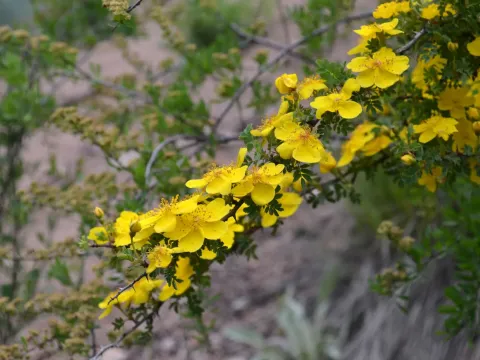
Eca rose
Rosa ecae
The Eca rose, scientifically known as Rosa ecae, is a remarkable member of the Rosaceae family originating from the mountainous terrains of Afghanistan and Tajikistan. It is characterized by its slender, thorny branches and tiny, delicate foliage that adds a refined texture to any garden setting.
What the section contains
Eca rose
Cultivation of this species requires careful site selection, as it thrives under full sun exposure. Unlike many modern rose cultivars, Rosa ecae is highly drought-tolerant, making it an excellent choice for xeriscaping or gardens situated in arid climates where water conservation is a priority.
Regarding soil preference, the plant demands excellent drainage. It performs best in gritty, sandy, or rocky soil compositions. Growers must avoid damp, heavy clay soils, as they inevitably lead to root rot and compromise the structural integrity and health of the shrub.
In terms of climate, Rosa ecae exhibits impressive hardiness. It is well-adapted to wide temperature fluctuations typical of high-altitude environments. While it withstands cold winters, maintaining a dry environment around the root crown is essential to prevent moisture-related winter damage.
The economic and horticultural value of the Eca rose lies in its unique ornamental appearance and its role in rose breeding programs. It is particularly valued for its early spring flowering period and brilliant, buttercup-yellow blossoms, which serve as a source of hardy genetics for hybridizers.
The primary threats to Rosa ecae are fungal diseases, such as powdery mildew, which often flourish if the plant is kept in overly humid conditions or poor air circulation. Proper spacing during initial planting remains the most effective prophylactic measure against these issues.
Insect pests, including aphids and spider mites, are common nuisances during the warmer months. These pests can rapidly affect the young, tender foliage. A regular monitoring schedule and the application of horticultural soaps or selective insecticides can help mitigate potential damage.