
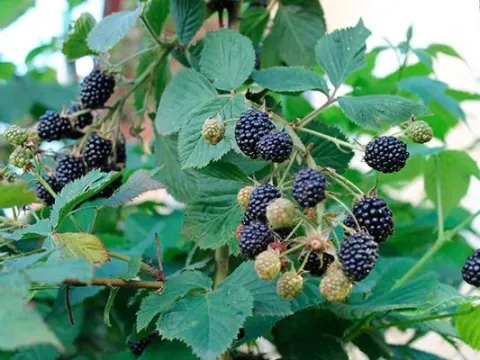
European dewberry
Rubus vulgaris
The European dewberry (Rubus caesius), belonging to the Rosaceae family, is a hardy perennial shrub often found in the wild across Europe and Asia. In agricultural practice, it is primarily propagated vegetatively through tip layering or root cuttings to ensure the preservation of specific varietal traits.
What the section contains
European dewberry
Planting container-grown specimens is possible throughout the growing season, though the optimal periods are early spring before the sap rises or autumn, roughly a month before the ground freezes.
Seed propagation is reserved for breeding programs and requires a cold stratification period of three to four months in a moist substrate to break dormancy.
For commercial orchards, a row planting system with spacing of 1.5 to 2 meters between plants is recommended, providing sufficient space for vigor and light penetration to the foliage.
Site selection is critical, favoring locations with full sun exposure and protection from harsh, drying winds, which significantly improves establishment rates during the first year.
The crop thrives in fertile loamy or sandy soils with a neutral to slightly acidic pH level, requiring good organic matter content for optimal root development.
While the dewberry appreciates consistent soil moisture, it strictly avoids waterlogged conditions; thus, proper drainage or the use of raised beds is essential in heavier clay soils.
An ideal temperature range for active growth falls between +18 and +25 degrees Celsius, though the plant is remarkably adaptable to various temperate climates.
Routine pruning is a cornerstone of productivity, as this species bears fruit on second-year canes; therefore, removing spent canes immediately after harvest is non-negotiable.
In colder regions, canes must be removed from trellises and protected with horticultural fleece or mulch to prevent frost damage to the dormant flower buds.
Yield potential is highly dependent on effective crop management, including adequate light exposure and irrigation, particularly during the fruit development stage.
With high-quality maintenance, a mature bush can produce between 3 and 5 kilograms of berries, with commercial plots under intensive management yielding up to 10–15 tonnes per hectare.
Dewberries are rich in essential vitamins, organic acids, and antioxidants, making them highly desirable for fresh market sales and high-quality food processing, such as jams or purees.
A well-maintained plantation remains productive for approximately 10 to 12 years, after which either systemic pruning or full stand renovation is required to maintain output.
Balanced fertilization, with a focus on phosphorus and potassium during flowering and fruit setting, is vital to maximizing both the size and the flavor profile of the harvest.
Rust diseases represent a significant threat to the crop, especially in humid or stagnant air conditions, where they can rapidly defoliate plants and stunt growth.
Anthracnose and gray mold (Botrytis) are also common fungal issues, necessitating proactive fungicide applications during the early spring and pre-flowering stages.
Pests such as the strawberry blossom weevil, which targets flower buds, and the blackberry mite, which causes uneven ripening of the drupelets, must be closely monitored.
Integrated pest management, including crop rotation and the thorough removal of plant debris during winter cleanup, helps significantly reduce the overwintering pest population.
Utilizing resistant cultivars and promoting beneficial insect habitats are effective strategies for reducing chemical dependency while maintaining healthy plant vigor.
Harvesting is labor-intensive and must be done by hand, as the delicate berries are prone to bruising and quickly lose their structural integrity if handled roughly.
The harvest period is typically staggered, requiring repeated passes every few days to collect berries at the peak of maturity, preferably in the cool early morning hours.
For the fresh market, berries should be harvested with the stem attached to improve post-harvest longevity when kept in cold storage at +2 to +4 degrees Celsius.
Berries intended for processing, such as freezing or concentrate production, can be harvested at full ripeness, ensuring the highest sugar concentration and characteristic aroma.
Logistics play a major role in quality control, using shallow containers to prevent pressure damage to the bottom layers of the fruit during transit to market.