
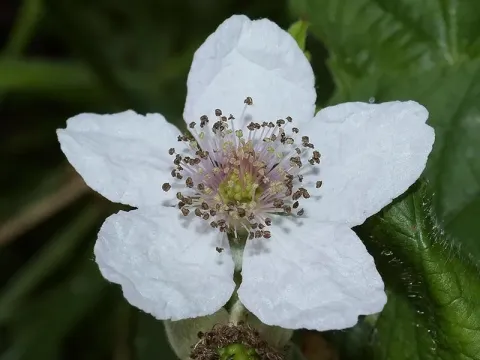
Forest blackberry
Rubus nemorosus
Propagation of the forest blackberry (Rubus nemorosus) is best achieved through vegetative methods, such as rooting dormant cuttings or layering, to ensure the resulting plants remain true to their type.
What the section contains
Forest blackberry
The ideal planting time is early spring, as soon as the soil becomes workable, or during the autumn months to allow roots to establish before winter frost.
Proper spacing is crucial for forest blackberry plantations, with a minimum of 1.5 to 2 meters between plants to ensure sufficient airflow and light penetration.
Soil preparation involves deep tilling and the incorporation of organic matter, like well-rotted compost, to provide a fertile base for the developing root system.
Choosing a site with partial shade mimics the natural forest habitat of the species, preventing sunscald on the delicate leaves and keeping the root zone cooler.
Forest blackberries thrive in well-drained, fertile loam soils that have a slightly acidic to neutral pH balance, which is optimal for nutrient uptake.
While the plants appreciate consistent soil moisture, they are highly susceptible to root rot if the site becomes waterlogged, necessitating good drainage.
Mulching the root area with organic material is a highly recommended practice to maintain soil moisture levels and suppress the growth of competitive weeds.
Regular irrigation is particularly critical during the flowering and fruit-setting stages; drought stress at these times will lead to small, underdeveloped berries.
Maintenance involves seasonal pruning, which includes removing dead or diseased canes and thinning the new growth to ensure the plant directs energy to fruit production.
The yield of Rubus nemorosus is heavily influenced by the age of the canes, as fruit is produced on second-year growth; thus, biennial pruning is essential.
Under favorable conditions and proper management, a mature, healthy blackberry bush can produce significant harvests over the course of its productive season.
Average yield per plant varies depending on environmental conditions, but cultivators can expect several kilograms per bush with adequate irrigation and fertilization.
Harvesting usually occurs over an extended window of several weeks, requiring multiple passes through the plantation to collect berries at their peak ripeness.
Consistent yield levels are maintained by carefully selecting productive varieties and managing the density of the canes to prevent overcrowding and shading.
Common issues facing forest blackberries include fungal infections such as anthracnose and gray mold, which often thrive in dense, humid environments.
Pests such as aphids and blackberry mites can cause significant damage to the plant's development and diminish the quality of the harvested fruit.
Effective management strategies center on keeping the site clean, thinning the foliage to improve circulation, and removing infected plant tissue immediately.
- Regular site inspection for early detection of pests.
- Pruning to remove crowded or damaged canes.
- Application of organic or chemical fungicides during pre-bloom stages.
Integrated pest management is the preferred approach, minimizing chemical impact while maintaining the health and productivity of the blackberry plantation.
Harvesting requires significant care because the berries are delicate and bruise easily, which significantly reduces their storage life and market value.
The best time to harvest is during the cool hours of the morning, ensuring the berries are free from dew and protected from excessive field heat.
Using shallow containers is essential to prevent the weight of the berries from crushing those at the bottom, helping to maintain their integrity during transport.
The fruit is highly versatile, suitable for immediate fresh consumption, as well as being an excellent choice for preserves, jams, and freezing.
For optimal storage, the harvested berries should be cooled immediately to temperatures near freezing to maintain their fresh flavor and nutritional content.