
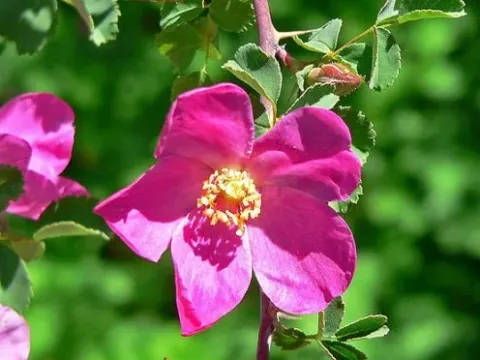
Forrest rose
Rosa forrestiana
The Forrest rose (Rosa forrestiana) is an ornamental shrub belonging to the Rosaceae family. Native to the mountainous regions of Southwestern China, it is well-regarded for its adaptability to cooler temperate environments and its graceful, arching growth habit.
What the section contains
Forrest rose
Botanically, this species is defined by its slender, thorny canes and elegant pinnate foliage. It typically reaches a height of 2 to 2.5 meters, making it an excellent candidate for large borders or naturalistic informal garden settings where space allows for spreading branches.
The plant thrives in full sun but can tolerate partial shade. To ensure optimal performance, it requires well-drained, fertile loam soil. While it is relatively drought-tolerant once established, supplemental irrigation during the peak summer months promotes more vigorous flowering and overall health.
In terms of climate requirements, it shows excellent cold hardiness, allowing it to survive harsh winters that might challenge more tender rose varieties. It is essential to ensure that the planting site has good air circulation to maintain plant vigor throughout the growing season.
The primary horticultural use of Rosa forrestiana is decorative. Its delicate pink flowers appear in late spring, followed by bright red, persistent hips that provide visual interest throughout the autumn and early winter, making it a valuable addition to multi-seasonal gardens.
Like most roses, the Forrest rose is susceptible to common fungal pathogens, including powdery mildew and black spot. Maintaining proper spacing and pruning for airflow are the best cultural practices to mitigate these risks in humid climates.
Pest management should focus on monitoring for aphids and spider mites, which can feed on tender new foliage. Early detection and the use of insecticidal soaps or horticultural oils can often control localized infestations without the need for heavy chemical intervention.
Rust can occasionally occur during prolonged wet weather. It is important to clean up fallen leaves around the base of the plant in the autumn to reduce the overwintering inoculum of these fungal diseases.
Annual maintenance pruning is necessary to remove dead, damaged, or diseased wood. This practice not only keeps the plant tidy but also stimulates new growth, which is essential for consistent flowering performance year after year.
Overall plant health is the best defense against pests and diseases. Providing balanced fertilization and maintaining adequate moisture levels will bolster the shrub's natural resistance, ensuring a long-lived and beautiful specimen in the landscape.