
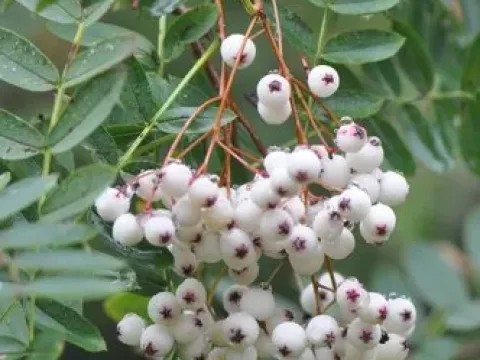
Forrest's Mountain Ash
Sorbus forrestii
Forrest's Mountain Ash (Sorbus forrestii) is a stunning deciduous tree or large shrub belonging to the Rosaceae family. It was named after the Scottish botanist George Forrest, who discovered the species during his extensive botanical explorations in Southwest China.
What the section contains
Forrest's Mountain Ash
Naturally occurring in the high-altitude regions of Yunnan, this plant thrives in cool, moist climates. It prefers fertile, well-drained loamy soils with a pH ranging from slightly acidic to neutral, reflecting its native mountainous habitat.
Botanically, the tree is noted for its graceful, upright habit, growing up to 6–8 meters tall. Its leaves are pinnate, consisting of numerous narrow, lanceolate leaflets that create a delicate, feathery texture throughout the growing season.
To ensure optimal health, the tree should be planted in a location with full sun or partial shade. While it is hardy, the tree requires consistent moisture, especially during the first few years after planting and during periods of summer drought.
Winter care is essential in colder regions; a layer of organic mulch around the base helps retain moisture and protect the root system from freezing. Pruning should be kept to a minimum, primarily focusing on removing dead or crossing branches in early spring.
The primary use of Sorbus forrestii is in ornamental gardening and landscape design. It is highly sought after for its unique white or cream-colored berries that provide a striking visual impact against the tree's vibrant orange and red autumn foliage.
In late spring, the tree produces dense corymbs of creamy white flowers. These blossoms provide a nectar source for pollinators, making the tree a beneficial addition to gardens that support local insect populations.
The fruits serve as an ecological resource, as they often persist on the branches well into winter, providing essential food for birds. This ecological function adds to the value of the plant in wild-garden designs and naturalistic landscapes.
Although not grown for commercial fruit production or timber, the tree's contribution to urban biodiversity and aesthetic landscape value is significant. It stands out in any garden collection due to its distinct, bright, and long-lasting fruit display.
Propagation is typically achieved through seeds, which require stratification to break dormancy. For those looking to replicate specific growth traits, grafting onto more common Sorbus rootstocks is a standard horticultural practice.
Like many species in the Rosaceae family, Forrest's Mountain Ash can be susceptible to fungal diseases such as leaf rust and powdery mildew. Maintaining adequate spacing between trees to ensure good air circulation is the best preventative measure.
Fire blight is a serious bacterial disease that can affect this species. If symptoms are identified, prompt pruning and disposal of affected branches are necessary to contain the pathogen and prevent the decline of the entire specimen.
Insect pests, including aphids and various leaf-eating caterpillars, may occasionally infest the foliage. Regular monitoring and, if necessary, the use of insecticidal soaps or biological controls can effectively manage these issues.
Root rot is a common issue if the soil remains waterlogged. Ensuring that the planting site has excellent drainage is crucial for the long-term health of the plant, especially in regions with heavy clay soil.
- Monitoring for fungal infections.
- Management of common sap-sucking insects.
- Ensuring proper soil drainage.