
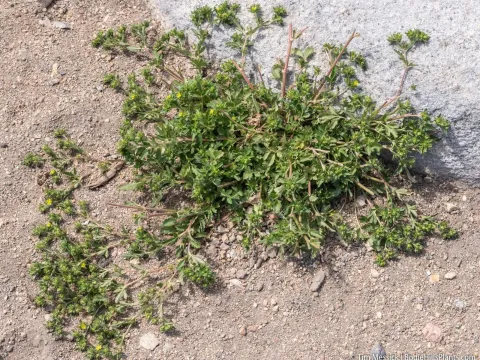
Brook cinquefoil
Potentilla rivalis
Brook cinquefoil (Potentilla rivalis) is an annual herbaceous plant belonging to the Rosaceae family. While not a primary crop, understanding its ecological role is essential for effective farm management and land monitoring.
What the section contains
Brook cinquefoil
The plant originates from North America and is typically found in riparian zones, wetlands, and moist meadows. Its presence indicates high soil moisture levels, which can impact regional agriculture.
It thrives in temperate climates with a preference for open, sunny sites. High humidity and consistent water availability are critical for the rapid growth and life cycle completion of this species.
Botanically, Potentilla rivalis is characterized by branching stems that may reach a height of up to 80 cm. The foliage is typically trifoliate, and the small yellow flowers appear in terminal clusters during the growing season.
Agronomic management involves identifying suitable field drainage, as this species rarely persists in well-drained, dry, or arid soil conditions commonly found in intensive crop rotations.
As a wild species, Brook cinquefoil can host various pests and pathogens. These might include common insects that target Rosaceae members, such as aphids or leaf beetles.
Diseases like powdery mildew and various leaf spots are often observed, especially in environments where air circulation is restricted by dense vegetation.
The main threat posed to agriculture is the competition for nitrogen and water. Due to its prolific seed production, it can quickly establish itself if left unmanaged.
Mechanical control, such as timely mowing or soil cultivation before the flowering stage, is the most effective way to prevent seed bank replenishment.
Chemical control strategies are usually centered around the application of selective herbicides used for broad-leaved weed control, ensuring compatibility with the main commercial crop.