
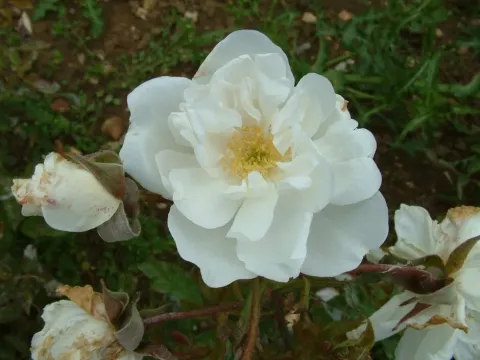
Bruant Rose
Rosa bruantii
The Bruant Rose (Rosa × bruantii) is a distinctive hybrid belonging to the Rosaceae family. It is a result of selective breeding designed to produce a garden shrub that balances the robustness of wild species with the aesthetic appeal of ornamental roses.
What the section contains
Bruant Rose
Optimal growth requires a sunny location that receives at least six to eight hours of direct sunlight daily. While resilient, the plant performs best when sheltered from heavy winds that can damage the developing flower buds during the spring season.
The soil should be nutrient-rich, well-draining, and maintain a slightly acidic to neutral pH. Providing organic matter through compost or well-rotted manure during the planting process significantly improves the plant's overall vigor and resilience.
Cultural practices include consistent watering, especially during prolonged dry spells, taking care to apply water at the base to prevent wetting the foliage. Regular mulching is essential to suppress weed growth and retain soil temperature stability.
Pruning is a critical maintenance step for this variety. Removing dead or diseased wood in early spring encourages strong new growth and ensures that energy is directed toward producing high-quality blooms rather than maintenance of damaged stems.
Common pathological threats include black spot and powdery mildew. These fungal issues typically arise in environments with high humidity or poor air circulation, necessitating strategic spacing between individual plants.
Insect pests such as aphids, spider mites, and rose slugs are frequent visitors. Aphids tend to congregate on tender new growth, while spider mites flourish during dry, hot weather, potentially causing significant leaf damage if left unchecked.
Proactive disease management involves the use of copper-based or systemic fungicides applied early in the season. These measures act as a barrier against spore germination and protect the foliage from early colonization.
Pest monitoring should be performed weekly to ensure early detection. Integrated pest management, including the encouragement of beneficial insects like ladybugs, can often reduce the need for heavy chemical interventions.
Sanitation is key to preventing the recurrence of infections. Carefully collecting and disposing of fallen leaves at the end of the season reduces the overwintering population of fungi and pests that could re-infest the shrub in the following year.