
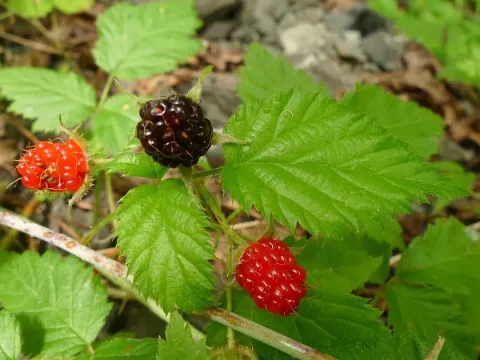
Himalayan blackberry
Rubus discolor
The Himalayan blackberry (Rubus discolor), a member of the Rosaceae family, is a robust, perennial shrub known for its vigorous growth and arching, thorny canes. Originally native to Europe, it has become widely established in many parts of the world.
What the section contains
Himalayan blackberry
To thrive, this plant requires full sun exposure. While it can tolerate partial shade, a significant reduction in light will negatively affect its flowering capacity and the sugar content of the ripening berries.
Soil requirements include well-drained, fertile soil that maintains a slightly acidic to neutral pH level. The species is highly adaptable to various soil types, but it performs best in rich loam where root systems can establish deeply.
Adequate spacing is a critical management practice. Due to its aggressive nature, plants should be spaced at least 2 to 3 meters apart to allow for airflow and ease of harvesting, preventing the canopy from becoming overly dense.
The plant is relatively hardy but benefits from protection in areas with extreme winter temperatures. In colder zones, the canes should be managed carefully to ensure they do not suffer from frost damage to the fruiting buds.
Yield potential in Rubus discolor is high if the canes are properly trained and pruned. Implementing a trellis system is essential for supporting the long, heavy canes and keeping the fruit off the ground, which improves berry quality.
An established, healthy plant can produce a substantial volume of fruit per season. The berries are typically large and firm, making them an excellent choice for commercial production, fresh market sales, and processed goods like preserves.
Regular pruning of primocanes and floricanes is necessary to maximize productivity. By removing old canes after the harvest, the plant diverts energy into new growth, ensuring a cycle of consistent fruit production in subsequent years.
Water management is crucial during the fruit development stage. Consistent soil moisture, especially during dry spells, prevents the berries from shriveling and ensures they achieve their full size and optimal juiciness.
Soil fertility should be maintained through balanced fertilization. Applying organic mulch around the base of the plant provides nutrients over time while also helping to suppress competing weeds and retain soil moisture.
The primary threats to the Himalayan blackberry include fungal diseases such as cane blight and rust. These issues are often exacerbated by humid weather conditions and poor ventilation within the trellis structure.
Insect pests such as the raspberry crown borer and various types of aphids can cause significant damage. Vigilant monitoring during the growing season is necessary to catch infestations before they affect the yield quality.
Sanitation is the most effective form of disease control. Removing and disposing of infected or dead canes immediately after harvest significantly reduces the number of spores that overwinter in the garden.
When necessary, the use of fungicides or insecticides should be timed carefully. Integrated pest management (IPM) practices, including the use of beneficial insects, are highly recommended to keep populations in check.
- Proper pruning to improve air circulation.
- Regular inspection for leaf discoloration.
- Clearing fallen debris to prevent fungal growth.
- Monitoring for distorted fruit development.