
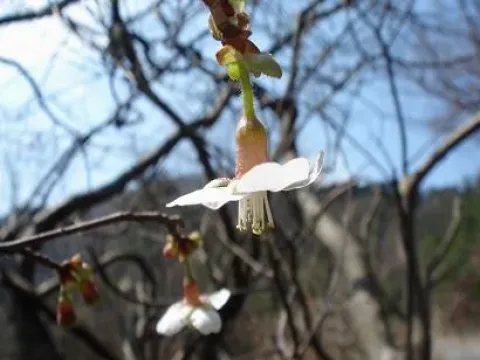
Himalayan cherry (Prunus ceraseidos)
Prunus ceraseidos
Prunus ceraseidos is a distinctive species within the Rosaceae family, native to the mountainous regions of the Himalayas. Its evolutionary adaptation to high-altitude environments results in specific requirements for its cultivation in domestic gardens or nurseries.
What the section contains
Himalayan cherry (Prunus ceraseidos)
The species thrives in well-drained, fertile soil that balances moisture retention with proper aeration. It does not tolerate waterlogged conditions, which can lead to rapid root decay, therefore selecting a sloped or well-drained planting site is essential for success.
Regarding climate, this tree prefers cooler temperate conditions with sufficient sunlight exposure for optimal bloom. While it exhibits decent cold hardiness, young specimens require protection from severe frost and drying winter winds to prevent damage to the bark and buds.
Regular maintenance involves mulching to stabilize soil temperature and moisture levels. Organic materials such as bark or compost are ideal, as they also contribute to soil fertility as they decompose over time, mimicking the forest floor conditions of its native habitat.
The primary use of Prunus ceraseidos is ornamental, valued for its delicate flowers and characteristic growth habit. In professional horticulture, it is often studied as a hardy rootstock or a parent species for breeding varieties that require resilience against changing climatic stressors.
Fungal infections such as blossom wilt and leaf spot pose the greatest risks to this species. Preventive measures include ensuring good air circulation within the canopy and removing any infected wood during the dormant season to minimize spore accumulation.
Pests including aphids and various defoliating caterpillars can affect the plant during the active growing phase. Integrated pest management, focusing on monitoring and utilizing selective organic sprays, is recommended to maintain the tree's vigor without harming beneficial pollinators.