
Hillier cherry
Prunus hillieri
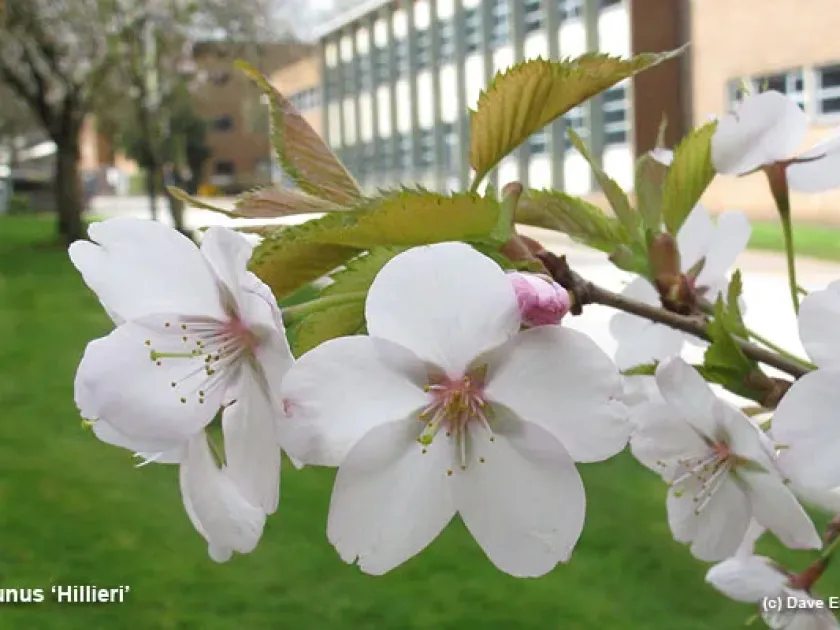
Description
Growing requirements
The Hillier cherry (Prunus hillieri) is a popular ornamental hybrid belonging to the Rosaceae family, resulting from a cross between Prunus incisa and Prunus sargentii.
This tree is highly valued for its prolific, delicate blossom in early spring and its elegant, spreading growth habit, making it a perfect specimen for residential gardens.
It thrives best in full sun, which promotes maximum flowering density and ensures that the foliage retains a healthy, vibrant color throughout the season.
The species requires well-drained, fertile soil that maintains a consistent moisture level but is never prone to waterlogging, as the roots are sensitive to anaerobic conditions.
General maintenance includes annual mulching around the root zone to conserve moisture and providing regular irrigation during the initial years of establishment.
Main diseases and pests
Prunus hillieri is susceptible to common fungal pathogens including Monilinia (blossom wilt), which can significantly affect the floral display if conditions are humid.
Shot-hole disease and other leaf spot fungi may appear during rainy periods, necessitating the use of copper-based fungicides for effective management.
Pest pressures often include aphids that target tender new growth; controlling them early is vital to prevent leaf curling and secondary viral issues.
Scale insects can occasionally infest the bark of older specimens, which requires careful monitoring and potential dormant oil applications during the winter.
Regular pruning to remove dead or overcrowded branches improves airflow throughout the canopy, which is the most effective cultural method for reducing disease risk.