
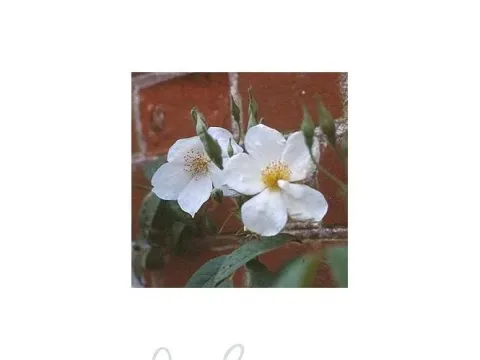
Himalayan Musk Rose
Rosa brunonii
The Himalayan Musk Rose (Rosa brunonii) is a perennial shrub belonging to the Rosaceae family. It is renowned for its vigorous climbing habit, often scaling large trees and structures with stems reaching lengths of up to 10 to 12 meters in ideal environments.
What the section contains
Himalayan Musk Rose
Originating from the Himalayas, its range extends across Afghanistan, Pakistan, India, and parts of China. The plant is adapted to mountainous landscapes, thriving at altitudes where it can access sufficient sunlight and cool, moist air during its active growth phase.
Botanically, it is characterized by its long, slender, often trailing stems armed with curved prickles. The foliage is typically glaucous or grayish-green, providing an elegant backdrop to its mass of single white flowers that produce a strong, sweet, musk-like fragrance.
Requirements for cultivation include a location with full sun to partial shade and deep, well-draining, nutrient-rich soil. While the species is robust, it requires significant vertical support, such as sturdy trellises, pergolas, or mature trees, to display its full growth potential.
In terms of usage, the plant is prized in landscape architecture for its rapid vertical coverage and ability to create massive, fragrant screens. It is also an important genetic resource for breeding programs focused on disease resistance and unique scent profiles in modern rose cultivars.
Rosa brunonii can be susceptible to common fungal infections, particularly powdery mildew and black spot, which often develop during periods of high humidity or poor air circulation.
Common pests affecting this species include aphids, spider mites, and rose sawflies. These insects can cause significant damage to young shoots and leaves if their populations are not managed during the early spring season.
Effective management strategies involve regular sanitation of the plant by removing dead or crossing branches to improve airflow, which inherently reduces the risk of fungal outbreaks.
Chemical control should be applied sparingly, focusing on systemic insecticides if pest infestation becomes severe, or using horticultural oils for preventative measures against mite populations.
Nutritional management is also vital; balancing soil nutrients helps the rose maintain natural defenses against environmental stressors and potential pathogens, ensuring long-term health of the shrub.