
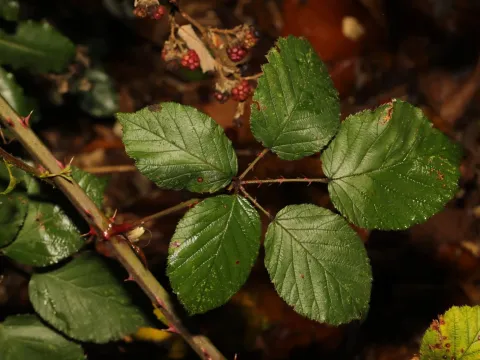
Heart-leaved blackberry
Rubus cardiophyllus
Heart-leaved blackberry (Rubus cardiophyllus) belongs to the Rosaceae family and is a perennial shrub native to European forest margins and hedgerows, known for its adaptability.
What the section contains
Heart-leaved blackberry
The plant thrives in loamy, well-drained soils that are rich in organic matter. A neutral or slightly acidic soil pH is ideal for optimal nutrient absorption and vigorous vegetative growth.
Climatically, it prefers regions with moderate temperatures and sufficient rainfall during the spring and early summer. While relatively hardy, protection against harsh winter winds is recommended to preserve the integrity of the canes.
Agrotechnical practices involve pruning older, dead canes annually to stimulate new growth. Providing a trellis system helps organize the arching stems, facilitating easier maintenance and sunlight exposure.
Mulching the base of the plant is highly recommended to regulate soil temperature and moisture levels, which is crucial for the development of healthy fruiting buds.
The yield of Rubus cardiophyllus can be quite prolific when managed with consistent pruning and feeding. Mature plants typically bear fruit on second-year canes.
Yield capacity is influenced by the density of the planting and the availability of water during the critical fruit-swelling stage. Proper thinning of canes ensures that energy is directed toward fruit production rather than excessive vegetative growth.
The berries are valued for their intense flavor, making them an excellent choice for fresh consumption, baking, or commercial processing into preserves and juices.
Regular application of potassium-rich fertilizers can significantly improve the sugar content and overall size of the berries during the fruiting season.
With correct orchard management, this species can maintain high levels of productivity for many years, provided the old wood is removed systematically after the harvest.
Common threats to this blackberry species include fungal issues like cane blight and rust, especially in areas with poor airflow and high humidity levels.
Pests such as aphids and spider mites can infest the foliage, potentially stunting growth if left untreated. Integrated pest management strategies are highly effective for this crop.
Maintaining clear, weed-free soil around the base of the shrubs helps reduce the prevalence of pathogens that persist in the soil and leaf litter.
Pruning is the primary method of disease control; by removing infected or weak canes, gardeners can prevent the spread of spores throughout the entire planting area.
Monitoring the undersides of leaves during the peak of summer is essential for the early detection of common blackberry pests and swift intervention.
Harvesting should be done manually when the berries have turned fully black and have lost their initial tartness, indicating peak sugar development.
Since blackberries ripen gradually, multiple picking rounds are required to ensure the harvest is collected at the perfect stage of maturity.
The berries are extremely delicate and should be handled with care to prevent bruising. Placing them directly into shallow containers minimizes the need for further sorting.
Post-harvest handling is critical for maintaining quality; fruit should be stored in a cool place or refrigerated immediately to extend shelf life.
Gardeners are advised to wear protective gloves during harvest to navigate the plant's thorns effectively without damaging the fruit or the skin.