
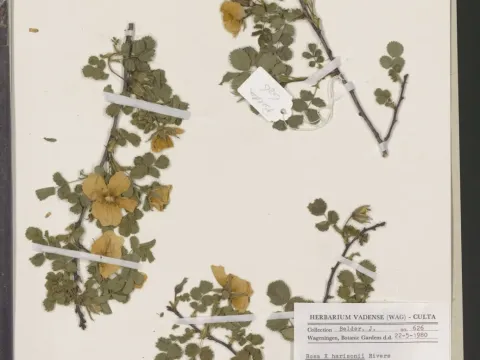
Harison's Yellow Rose
Rosa harisonii
Harison's Yellow Rose (Rosa harisonii) is a hardy hybrid shrub belonging to the Rosaceae family. This resilient plant, often referred to as the Oregon Trail Rose, is a hybrid of Rosa foetida and Rosa pimpinellifolia, celebrated for its ability to thrive in challenging climates and survive harsh winters.
What the section contains
Harison's Yellow Rose
The culture requires a location with full sun exposure to ensure vigorous growth and an abundant floral display. While it exhibits tolerance to partial shade, optimal health and disease resistance are achieved when the plant receives at least six to eight hours of direct sunlight per day.
Regarding soil preferences, the plant excels in well-drained, sandy or loamy substrates. It is essential to ensure that the site does not hold standing water, as the root system of Rosa harisonii is susceptible to rot in waterlogged conditions, which may lead to plant decline.
Cultivation practices involve minimal intervention once established. Light fertilization in early spring provides sufficient nutrients to support the blooming cycle. Mulching with organic matter helps stabilize soil temperature and moisture levels throughout the growing season.
Pruning should be performed immediately after the spring bloom. Removing older, non-productive canes and shaping the shrub enhances air circulation within the canopy, which is a critical factor in maintaining the overall health and vigor of the specimen.
Powdery mildew is the most common fungal issue for Harison's Yellow Rose, particularly in areas with high humidity and poor air movement. Proper spacing between individual plants and localized thinning of the branches are highly effective preventive strategies.
Black spot may develop under conditions of constant leaf wetness. To mitigate this risk, it is recommended to water the soil directly rather than using overhead irrigation, ensuring the foliage remains dry as much as possible throughout the day.
Aphids frequently infest the tender new growth and developing buds during the peak of spring. Management typically involves manual removal, the use of beneficial insects like ladybugs, or the application of insecticidal soaps if an infestation becomes widespread.
Spider mites can be problematic during hot and dry summer weather. Keeping the plant properly hydrated and occasionally washing the foliage with a forceful spray of water can significantly reduce mite populations before they reach economic damage levels.
Maintaining a clean garden environment by removing debris around the base of the shrub helps reduce the overwintering capacity of common rose pests. Healthy, well-fed plants naturally demonstrate a higher tolerance to minor pest and pathogen pressures.