
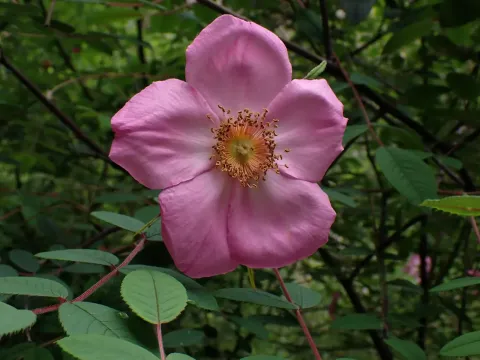
Hemsley Rose
Rosa hemsleyana
The Hemsley Rose (Rosa hemsleyana) is a perennial deciduous shrub belonging to the Rosaceae family. It is native to the mountainous regions of Hubei and Sichuan provinces in China, where it thrives at significant altitudes.
What the section contains
Hemsley Rose
This species requires well-drained, moderately fertile soil with a slightly acidic to neutral pH. It is characterized by its ability to adapt to diverse ecological conditions, although it performs best in full sunlight to ensure optimal photosynthesis and flowering.
The plant demonstrates good climatic adaptability. In an agricultural or garden setting, it needs regular hydration during the establishment phase and consistent moisture levels during dry summer spells to maintain turgor pressure in its stems and foliage.
Botanically, Rosa hemsleyana is distinguished by its pinnate leaves and specific floral structure. The shrub develops a complex, dense architecture with thorny stems, which provides a natural barrier and contributes to its resilience in wild and cultivated environments.
Economically, the Hemsley Rose is primarily valued in ornamental landscaping and as a genetic resource for breeding programs. Its natural hardiness makes it an excellent candidate for hybridization projects aimed at creating cold-resistant rose varieties.
The Hemsley Rose is susceptible to common rose diseases, including powdery mildew and black spot. These fungal conditions are often exacerbated by poor air circulation and high humidity levels around the foliage, requiring careful management of the planting density.
Common pests such as aphids and spider mites frequently infest new growth during the spring season. These insects feed on the sap of the plant, potentially stunting growth and reducing the aesthetic appeal if left untreated.
Root rot is a critical threat often caused by overwatering or poorly draining soil conditions. Ensuring that the planting site has a proper gravel or sand-based drainage layer is essential to protecting the root system from oxygen deprivation.
Effective pest control involves a combination of cultural practices, such as pruning to improve airflow, and the targeted application of pesticides when biological thresholds are exceeded. Monitoring is crucial to identify infestations before they spread.
Regular maintenance, including the removal of dead or diseased wood, acts as an effective sanitation measure. By keeping the plant structure clean and open, gardeners can significantly mitigate the risk of pathogen overwintering and subsequent disease outbreaks.