
Heart-leaved pear
Pyrus cordata
The heart-leaved pear (Pyrus cordata) is a small deciduous tree belonging to the Rosaceae family. It is native to Western Europe, specifically identified in regions such as France, Spain, and Portugal, where it often grows in scrubland and open woods.
What the section contains
Heart-leaved pear
In terms of environmental requirements, this species favors well-drained, fertile soils with a neutral pH level. While it can survive on poorer substrates, its growth rate and vitality are significantly enhanced by adequate nutrient availability and sunlight exposure.
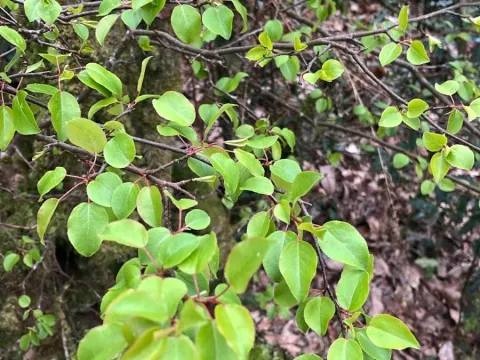
Botanically, it is recognized for its distinctive heart-shaped leaves and small, rounded fruits that are typically not harvested for commercial consumption but serve as a vital food source for local wildlife and birds.
The climatic adaptation of Pyrus cordata is quite robust, allowing it to withstand moderate frost and periodic dry spells. Young plants require consistent watering to establish deep roots, but mature specimens are generally drought-resistant and hardy.
Horticulturally, this species is frequently valued as an excellent rootstock for grafting domesticated pear cultivars. Its genetic resilience and ability to thrive in diverse conditions make it a significant asset for breeding programs aimed at improving climate adaptation.
Pyrus cordata is susceptible to typical Rosaceae diseases, with scab (Venturia pyrina) being the most prevalent. It causes spots on foliage and fruit, potentially leading to significant leaf drop if left unchecked during humid spring weather.
Fire blight is another major threat, capable of causing rapid tissue death. Infected branches appear scorched or blackened, requiring immediate pruning several inches below the affected site to prevent systemic tree failure.
Pests such as pear sawflies and aphids are common challenges for this species. Aphids tend to colonize the undersides of leaves, causing them to curl, while sawfly larvae skeletonize the leaf blade, reducing the tree's photosynthetic capacity.
Mites, specifically spider mites, may become an issue during prolonged heat waves, leading to chlorosis and early senescence of leaves. Improving airflow within the canopy is a preventative measure against these infestations.
The European fruit lecanium scale can infest the bark, weakening the tree over time by extracting sap. Monitoring the trunk and branches during late winter or early spring is essential for timely identification and management of the scale population.