
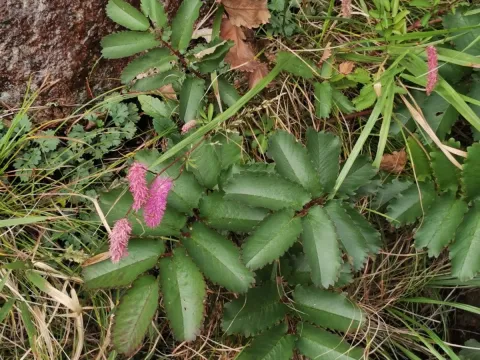
Hakusan burnet
Sanguisorba hakusanensis
Hakusan burnet (Sanguisorba hakusanensis) is a beautiful perennial flowering plant belonging to the Rosaceae family. Native to the mountainous regions of Japan and Korea, it is highly valued for its elegant, arching spikes of rose-pink flowers.
What the section contains
Hakusan burnet
The plant grows from a sturdy crown and produces lush, pinnate leaves arranged in a basal rosette. During the summer blooming period, the flower stems rise significantly, often reaching up to one meter in height, displaying long, catkin-like inflorescences.
This species thrives in locations with full sun to partial shade. To ensure vigorous growth, it requires soil that is consistently moist yet well-draining, mimicking its natural habitat on mountain meadows.
In terms of soil composition, Sanguisorba hakusanensis performs best in fertile, humus-rich loams. It is essential to ensure that the site does not become waterlogged during the dormant season, as this can lead to stress.
Regular maintenance includes basic cultivation practices such as spring fertilization and watering during extended dry spells. Mulching around the base is recommended to retain soil moisture and suppress weed development.
Hakusan burnet is generally considered a low-maintenance and disease-resistant plant. It is not typically prone to serious fungal outbreaks unless grown in conditions with poor air circulation or excessive soil moisture.
Root rot is the most common physiological threat associated with improper planting sites. If the soil remains saturated for long periods, the roots may decay, which is why soil permeability is a critical factor.
Pest pressure is usually minimal for this species. Occasional infestations of aphids or spider mites can be managed with integrated pest management techniques or gentle horticultural soaps when necessary.
The plant is hardy and adapts well to various climatic zones. Its cold tolerance makes it a reliable choice for gardens in regions with freezing winters, as it remains dormant underground until the spring thaw.
For best results, gardeners should divide mature clumps every few years. This process helps refresh the plant, prevents overcrowding, and ensures the continued health and aesthetic quality of the display in the landscape.