
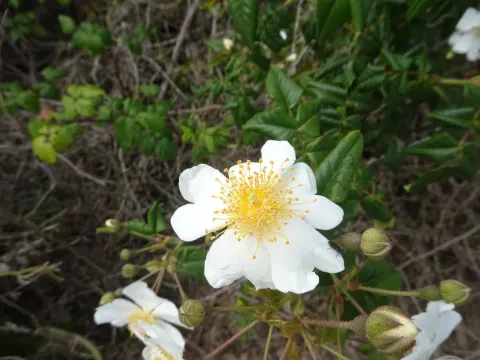
Evergreen rose
Rosa sempervirens
The evergreen rose (Rosa sempervirens) belongs to the Rosaceae family. It is a climbing, semi-evergreen shrub that retains its foliage in mild climates, giving it a unique place in ornamental gardening.
What the section contains
Evergreen rose
Originating from the Mediterranean region, this species is native to Southern Europe, North Africa, and parts of Western Asia. It thrives in warm environments and requires protection against severe frost, making it sensitive to extreme winter conditions.
This shrub prefers well-drained, humus-rich loamy soils. It performs best in neutral to slightly acidic soil conditions, which ensure the efficient uptake of micronutrients essential for robust growth and lush foliage development.
For optimal growth, the plants should be situated in full sun, though they exhibit a tolerance for light shade. A sunny location is crucial for maximizing flower production and maintaining the dense, shiny foliage that characterizes this species.
Cultural practices include regular watering during dry spells and annual fertilization in early spring. Pruning is essential to manage the plant's vigorous growth, prevent overcrowding, and maintain the desired shape on trellises or walls.
The primary use of Rosa sempervirens is in landscaping and garden architecture. Due to its long, flexible stems, it is frequently used to cover walls, pergolas, and fences, creating dense green barriers or vertical garden displays.
The plant produces hips that contain beneficial vitamins and antioxidants. While not typically grown for commercial fruit production compared to other rose species, they still provide ecological value by supporting local bird populations.
In terms of breeding, the evergreen rose is highly valued for its genetic traits. It has served as a parent species for numerous climbing rose varieties, imparting high vigor, resilience, and characteristic glossy leaves to its descendants.
The decorative value of this shrub is centered on its fragrant white flowers, which bloom in early summer. Its status as an evergreen plant provides persistent beauty, making it a reliable choice for year-round garden structure.
Proper support structures are necessary to exploit its full potential. Without support, the plant functions as an effective groundcover, as its stems readily take root when in contact with damp soil, forming large colonies.
Common pathological issues include powdery mildew and black spot. These fungal diseases thrive in high-humidity environments and can lead to defoliation if left unmanaged, particularly during wet and warm weather.
Insect pests such as aphids and leaf rollers pose the greatest threat to plant health. They feed on succulent growth, weakening the plant and damaging the aesthetic quality of the foliage, which is the primary feature of this species.
Disease prevention relies on proper sanitation and plant placement. Ensuring good airflow within the canopy and avoiding overhead watering helps to keep foliage dry, significantly reducing the likelihood of fungal infection.
Integrated pest management strategies should be applied to control aphid infestations, including the use of biological predators or targeted insecticides. Routine inspections are advised to catch pest populations before they cause structural damage.
Enhancing plant vigor through balanced fertilization and stress management helps the shrub withstand environmental pressures. A healthy, well-maintained plant is significantly more resistant to both common diseases and pest attacks.