
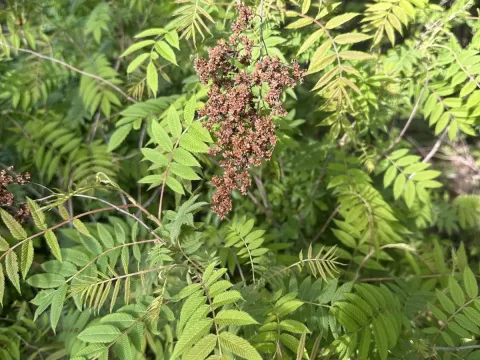
False Spirea
Sorbaria
False Spirea (Latin Sorbaria) is a deciduous flowering shrub belonging to the Rosaceae family. Native to the temperate regions of Asia, these shrubs are widely valued for their fern-like foliage and large, showy plumes of white flowers that bloom during mid-summer.
What the section contains


False Spirea
Botanically, the plant is characterized by its vigorous growth habit and ability to spread via underground suckers, forming dense colonies. The pinnately compound leaves can reach significant lengths, and the plant's architecture provides excellent structural interest in landscape design.
Regarding climatic requirements, Sorbaria is exceptionally hardy and adaptable. It thrives in temperate zones, tolerating harsh winters without requiring special protection. It prefers full sun to partial shade, although abundant sunlight is essential for prolific flowering.
In terms of soil, the species performs best in moist, fertile, and well-drained conditions. While it is tolerant of various soil types, maintaining consistent soil moisture is crucial, especially during the establishment phase and periods of dry weather.
Cultural practices involve annual pruning to maintain shape and control the aggressive spread of the root system. Removing old or damaged wood in early spring encourages fresh, vigorous growth and improves the overall health and appearance of the shrub.
The False Spirea is generally considered a low-maintenance plant, yet it can be susceptible to certain pests and diseases if environmental conditions are not optimal. Fungal issues, particularly leaf spot, may occur if the foliage remains wet for prolonged periods.
Pest pressure is usually limited, with aphids being the most common concern. These small insects tend to cluster on young, succulent shoots, potentially reducing the plant's vitality and causing leaf curling if left unmanaged.
Effective management includes maintaining proper spacing between plants to ensure adequate air circulation. This simple cultural practice is often enough to significantly reduce the humidity levels that favor fungal development within the canopy.
If chemical intervention is necessary, targeted insecticides are effective against aphid populations. It is important to apply these treatments early in the season to prevent the buildup of pest populations that could cause aesthetic damage to the shrub.
Overall, maintaining the plant's vigor through regular fertilization and adequate hydration is the best defense against threats. A strong, healthy plant is naturally more resistant to minor pest infestations and occasional pathogens.