
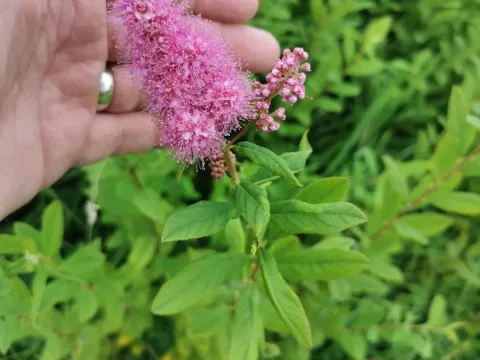
False willow-leaved spirea
Spiraea pseudosalicifolia
Spiraea pseudosalicifolia, commonly known as the false willow-leaved spirea, belongs to the Rosaceae family. It is a deciduous shrub highly regarded for its aesthetic value and structural resilience, often used as a hedge or an ornamental element in public and private gardens.
What the section contains
False willow-leaved spirea
The plant originates from the Far East, specifically regions spanning Siberia and Northern China. Because it naturally grows in wet meadows and riverbanks, it thrives in environments that offer consistent moisture, making it an excellent candidate for damp garden areas or pond margins.
Soil requirements for this species include fertile, moisture-retentive loamy soils. While the shrub exhibits significant adaptability to various soil pH levels, providing a nutrient-rich substrate significantly enhances its overall vigor and blooming performance during the mid-summer season.
Climatic requirements focus on cold hardiness, as the species is well-adapted to harsh winters. While it prefers full sun for optimal flower production, it can tolerate partial shade, though too much shade may lead to a thinner plant structure and reduced floral density over time.
Agrotechnical maintenance centers on systematic pruning. By removing older branches every spring, gardeners encourage the growth of vibrant new shoots. This practice not only rejuvenates the plant but also maintains the desired shape and ensures the health of the entire crown.
The false willow-leaved spirea is generally hardy, but it may suffer from powdery mildew in humid, stagnant air conditions. Proper spacing between shrubs is essential to promote airflow and prevent the development of such fungal infections throughout the growing season.
Aphids are the most frequent insect pests, targeting the tender tips of new growth. They can cause stunted growth or distorted leaves if left unmanaged. Early detection and the application of insecticidal soaps are usually sufficient to manage these populations without extensive chemical use.
Spider mites may appear during periods of intense heat and drought. These pests thrive in dry conditions and can cause the foliage to yellow or drop prematurely. Maintaining adequate soil moisture and occasional overhead watering can serve as an effective deterrent against mite colonization.
Leaf-eating caterpillars and beetles may occasionally feed on the shrub's foliage. Routine monitoring allows for manual removal of these pests if the infestation is localized. In cases of larger outbreaks, organic-approved insecticides can be utilized to protect the plant's aesthetic integrity.
Overall, maintaining plant health involves simple sanitation practices, such as clearing debris from the base of the shrub. This reduces the risk of overwintering pathogens and ensures that the spirea remains a strong, vigorous asset to the landscape throughout its lifespan.