
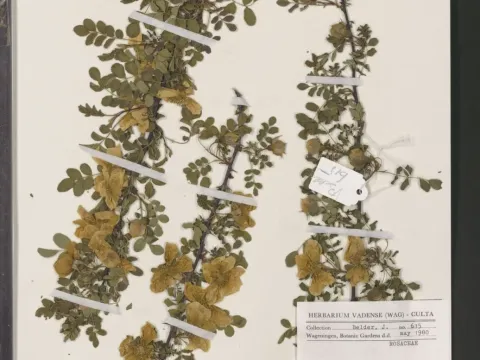
Rosa hugonis
Rosa hugonis
Rosa hugonis, commonly known as the Father Hugo rose, is a shrub species within the Rosaceae family. Native to Central China, it is highly valued for its early spring display of single, yellow flowers that cover the arching canes.
What the section contains
Rosa hugonis
The plant thrives in full sun and prefers well-drained, fertile soil. Due to its wild nature, it shows significant tolerance to various environmental stresses, making it a robust choice for sustainable landscape projects.
Agrotechnical maintenance includes regular watering in the first years of growth and minimal pruning to maintain the natural shape of the shrub. It is exceptionally winter-hardy and does not require complex seasonal protection.
Botanically, it is recognized by its small, fern-like foliage and stiff stems that can grow up to 2.5 meters in height. The bloom cycle is relatively early compared to modern rose hybrids, appearing in mid-to-late spring.
In terms of agricultural use, this rose is primarily ornamental. It is effectively utilized in xeriscaping, park development, and as a hedge due to its drought tolerance and low-input requirement once established.
The species is generally resistant to most rose diseases; however, powdery mildew can occur in humid and poorly ventilated conditions. Ensuring proper spacing between plants is the best preventive strategy.
Common pests such as aphids and leaf-eating beetles may occasionally infest the plant. Integrated pest management, focusing on monitoring and early intervention with mild pesticides, is sufficient to maintain plant health.