
Rosa caudata
Rosa caudata
Description
Sowing dates
Propagation of Rosa caudata is typically carried out vegetatively, with cuttings or budding on rootstock yielding the best results. It is recommended to plant nursery stock in the open ground during the autumn, while the soil retains warmth, or in early spring before active sap flow begins.
When sowing seeds, a prolonged stratification period is required, as the fruits of this crop have a distinct dormancy phase. Seeds should be sown in containers in autumn and placed in a cool location with a temperature around 3-5 degrees Celsius for 3-4 months to improve germination rates.
Choosing a planting site must be carefully planned; the crop prefers sunny areas protected from cold northern winds. The optimal planting density depends on the purpose: maintain a distance of 1-1.5 meters for hedges and up to 2.5 meters for solitary specimens.
Preparing the planting pit involves adding organic fertilizers such as well-rotted manure or compost, which ensures nutrients for the first years of growth. It is crucial not to bury the root collar too deeply, leaving it at the surface level to ensure successful establishment.
During the first weeks after planting, the plant requires regular irrigation, even if the soil moisture seems sufficient, to prevent drying out of the root system and ensure proper acclimatization.
Growing requirements
Rosa caudata belongs to the Rosaceae family and is a shrub native to the regions of Central China. This plant is characterized by high adaptability to various soil types, although it shows the best growth performance on loamy, humus-rich, and well-drained soils.
The crop is quite demanding regarding light conditions: for abundant flowering and the formation of bright, attractive hips, it requires at least 6-8 hours of direct sunlight per day. It is capable of withstanding moderate frosts, though in northern regions, it requires light covering of the root zone.
The soil pH should range from slightly acidic to neutral, ideally between 6.0 and 6.5. In cases of excessive alkalinity, plants may suffer from chlorosis, requiring the application of iron chelates or soil composition adjustments.
Irrigation should be moderate but regular during the active growth and flowering phases. It is vital to avoid water stagnation in the root zone, as Rosa caudata is sensitive to root rot, making efficient drainage a critical requirement for long-term health.
- High fertility requirements
- Need for protection from strong winds
- Importance of sufficient illumination
- Requirement for high-quality drainage
- Moderate water demand
Yield
The economic use of Rosa caudata is primarily focused on ornamental horticulture, where the plant is valued for the graceful shape of its hips. Yield in terms of decorative value is determined by the quantity and quality of the hips formed on the shrub.
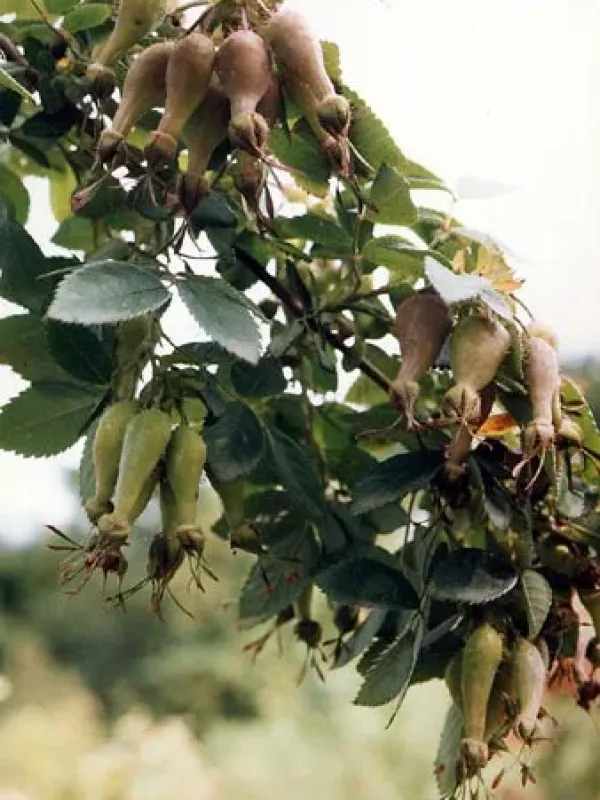
The fruits of this species have a characteristic elongated, "caudate" shape, making them attractive for floral arrangements and landscape design. With proper care, a mature bush can produce hundreds of hips that remain on the branches until late autumn.
The biological productivity of the plant depends directly on timely pruning, which stimulates the growth of new shoots. Older branches, those over 4-5 years old, should be removed as they diminish the overall aesthetic value and the number of blossoms formed.
In commercial nurseries, the output of high-quality planting material depends on adherence to budding technology. Competent agronomic practice allows for the production of uniform, well-structured plants ready for sale after a two-year cultivation cycle.
An additional use includes harvesting the hips for vitamin-rich supplements, as the fruits of this rose species contain significant amounts of ascorbic acid and pectin substances.
Main diseases and pests
The main phytopathological threats for Rosa caudata include fungal diseases such as powdery mildew and black spot. Prevention involves maintaining site hygiene and regular crown thinning to ensure adequate air circulation throughout the foliage.
Among pests, aphids and leaf rollers cause the most damage, attacking young leaves and buds. In cases of massive infestation, it is recommended to apply systemic insecticides during the active vegetation phase.
Spider mites pose a danger during dry periods, making it important to monitor the humidity levels around the bush. Spraying with clean water in the evening is an effective measure to prevent the appearance of this pest.
Infectious cane blight is a specific disease encountered after the winter season. Affected branches must be removed immediately, cutting into healthy tissue, and burned to prevent the spread of the infection.
An integrated plant protection system involves using both biological and chemical control methods, minimizing negative environmental impacts while maintaining the high aesthetic quality of the crop.
Harvesting
Harvesting the hips, whether used as a decorative element or for processing, should be performed during the phase of full biological maturity. This typically occurs in September or October when the fruits acquire their characteristic bright color.
When harvesting, it is necessary to use garden secateurs or shears to avoid damaging the plant's shoots, where next year's flower buds are initiated. The fruits should be carefully removed along with their pedicels.
After harvesting, the material requires careful sorting: damaged or diseased fruits should be disposed of immediately to prevent rot during storage. The remaining fruits are recommended to be kept in a cool, dark room.
For floral purposes, cutting branches with hips is best done in dry weather. This ensures better preservation of the decorative material and prevents the development of mold fungi on the stems.
It is important to remember that leaving a portion of the hips on the bush provides a vital food source for birds during the winter, serving as an important element of the ecological balance in garden ecosystems.