
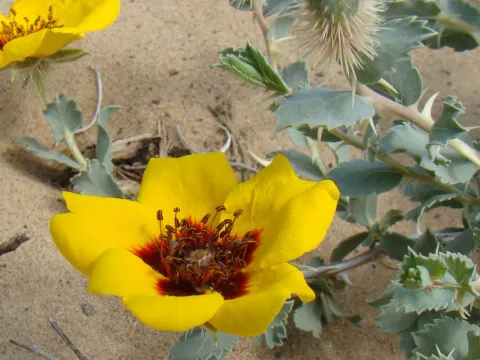
Sulfur rose
Rosa hemisphaerica
The Sulfur rose (Rosa hemisphaerica) is a perennial shrub belonging to the Rosaceae family, historically originating from the dry and mountainous regions of Western Asia, particularly Persia. It is highly valued for its distinct semi-double, sulfur-yellow blooms that resemble a hemisphere.
What the section contains
Sulfur rose
This species thrives in environments characterized by high sunlight intensity and well-drained, alkaline or neutral soils. Its natural adaptability to arid climates makes it an excellent candidate for xeriscaping, provided it is established properly during its initial growth phase.
The botanical structure consists of delicate foliage with a characteristic greyish-green hue. The stems are armed with thin, recurved prickles, and the plant maintains a moderate growth habit, making it suitable for ornamental borders or specialized rose gardens.
Cultivation requirements involve selecting a location with full exposure to direct sunlight. Unlike many hybrid garden roses, this species performs best when its roots have enough space to penetrate the soil, avoiding competition from more aggressive ground covers.
Soil management for Rosa hemisphaerica should focus on aeration. Using organic mulches helps to regulate soil temperature while suppressing weeds, but it is important to keep the mulch away from the base of the main stem to prevent localized moisture accumulation and bark rot.
Aphid infestations are common, particularly during the early spring when new, tender growth appears. Regular monitoring and the application of horticultural soaps or systemic pesticides are recommended to prevent significant damage to the floral buds.
Powdery mildew is a significant threat when evening humidity is high and temperatures fluctuate. Proper spacing between individual bushes is the most effective cultural practice to ensure adequate airflow and reduce the humidity levels that favor fungal spore germination.
Black spot, caused by the fungus Diplocarpon rosae, can lead to defoliation if left unchecked. Sanitation is critical; all dropped leaves and debris must be cleared from beneath the bushes each season to break the fungal life cycle.
Spider mites can become problematic during hot, dry spells. They thrive in dusty environments, so light overhead irrigation during peak heat can serve as a deterrent, though it must be balanced against the risk of fungal growth.
Root rot, specifically caused by Phytophthora species, can occur if the planting site lacks sufficient drainage. Ensuring that the site is not prone to waterlogging is the primary preventative measure for long-term survival of the sulfur rose.