
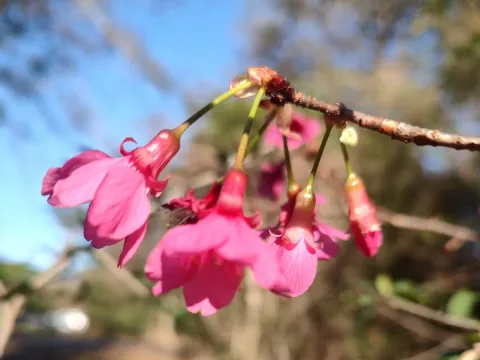
Taiwan cherry
Prunus campanulata
The Taiwan cherry (Prunus campanulata) belongs to the Rosaceae family. It is a stunning ornamental tree renowned for its bell-shaped, deep pink to rose-red flowers that bloom intensely before the foliage fully develops in early spring.
What the section contains
Taiwan cherry
Originating from the subtropical forests of Taiwan, Southern China, Japan, and Vietnam, this species thrives in warm and humid environments. It typically grows as a small to medium-sized deciduous tree with a graceful, spreading canopy.
Regarding site requirements, Prunus campanulata prefers full sun exposure to ensure prolific blooming. The soil must be well-drained, fertile, and slightly acidic. It does not tolerate heavy, waterlogged soils, which can lead to rapid decay of the root system.
Climate adaptation is a key factor; this cherry variety is best suited for USDA hardiness zones 8 and 9. It requires protection from severe frosts and strong, drying winds to maintain its structural integrity and prevent damage to its delicate flower buds.
The tree is primarily cultivated for its aesthetic value in landscape design. It is highly sought after for planting in public parks, residential gardens, and as a centerpiece in traditional-style gardens, often being referred to as a form of "Sakura" in warmer climates.
Prunus campanulata is susceptible to various fungal pathogens, such as leaf spot (Cercospora or Coccomyces) and blossom blight. Ensuring proper air circulation within the canopy through selective pruning is essential to mitigate the risk of fungal infections.
Common pests affecting this species include aphids, scale insects, and occasionally borers. Monitoring the trunk and leaves during the spring and early summer months is critical for early detection and effective control to ensure the longevity of the plant.