
Биоорганическое нано удобрение "НАГРО" / "NAGRO"
LLC NPO "BIOPLAN"
Fertilizers
43
25
1 offer
37.63 €за л
Buy

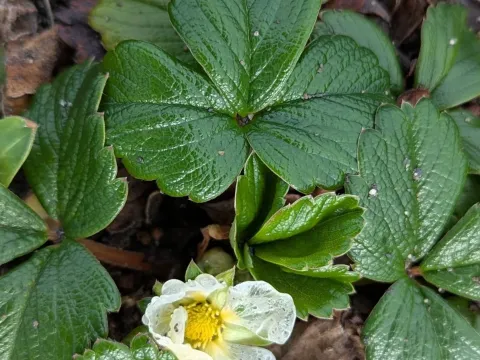
Fragaria L.
Strawberry planting is typically performed in spring or late summer, when temperatures are moderate to support root establishment. Spring planting allows plants to develop a robust root system before the onset of extreme summer heat.
 Fragaria vescana
Fragaria x vescana Rud. Bauer & A. Bauer
Fragaria vescana
Fragaria x vescana Rud. Bauer & A. Bauer
 Garden strawberry
Fragaria ananassa x Fragaria moschata
Garden strawberry
Fragaria ananassa x Fragaria moschata
 Garden strawberry
Fragaria x ananassa Duchesne ex Rozier
Garden strawberry
Fragaria x ananassa Duchesne ex Rozier
 Iinuma strawberry
Fragaria iinumae Makino
Iinuma's strawberry
Fragaria iinumae x Fragaria vesca
Iinuma strawberry
Fragaria iinumae Makino
Iinuma's strawberry
Fragaria iinumae x Fragaria vesca
 Musk strawberry
Fragaria moschata Weston
Musk strawberry
Fragaria moschata Weston
 Wild strawberry
Fragaria vesca L.
Wild strawberry
Fragaria vesca L.


Autumn planting, occurring between August and September, is ideal for allowing the plants to settle, prepare for winter dormancy, and set fruit buds for the following year. Utilizing seedlings with a closed root system ensures a higher success rate.
Soil preparation is critical: the site should be cleared of weeds at least two weeks before planting. Strawberries thrive in well-drained, sandy loam soils with a slightly acidic to neutral pH, which ensures optimal nutrient uptake.
Planting depth is a common pitfall; the "crown" of the strawberry must remain exactly at the soil surface level. Burying the crown can lead to rot, while planting it too high can cause the roots to dry out.
Belonging to the Rosaceae family, the strawberry is a perennial herbaceous plant. Its botanical nature allows for efficient vegetative propagation via runners, which can be managed to create high-density production rows or individual mounded beds.
Strawberries are sun-loving crops that require full exposure to sunlight for at least six to eight hours a day. Adequate lighting is essential for high sugar content and overall plant health, minimizing the risk of fungal infections.
Consistent moisture is vital, especially during the flowering and fruit-swelling stages. However, over-saturation must be avoided as standing water encourages root diseases and significantly reduces the crop's longevity.
The optimal temperature for growth ranges between 18 and 25 degrees Celsius. If temperatures exceed 30 degrees, growth slows, necessitating the use of irrigation or mulching techniques to stabilize the soil temperature and provide humidity.
A soil rich in organic matter provides the necessary structure and nutrients for Fragaria. Supplemental fertilization with potassium and phosphorus during the bloom stage is key to improving both fruit size and firmness.
Mulching with straw, plastic, or landscape fabric is a fundamental requirement. This practice keeps the berries clean, suppresses weed growth, and helps maintain a stable moisture level, which is critical for high-quality production.
Yield varies significantly based on the chosen cultivar, management practices, and plant density. Intensive commercial farming techniques can result in yields ranging from 15 to 30 metric tons per hectare under optimal conditions.
Production peaks occur in the second and third years after planting. By the fourth year, yields generally decline, making it necessary to rotate the patch or renew the plants to maintain consistent economic performance.
The use of day-neutral or everbearing varieties allows for a longer harvest season, which can significantly enhance profitability. These varieties, however, have higher nutritional requirements throughout the entire growing season.
Effective management of micronutrients, particularly boron and calcium, ensures improved fruit texture and longer shelf life. Balanced nutrition prevents common physiological disorders like deformed berries or internal hollows.
Strawberries are a primary horticultural commodity worldwide, with significant value for both fresh market sales and the food processing industry, including frozen products, preserves, and flavorings for various culinary applications.
Strawberry crops are susceptible to various pathogens, including Verticillium and Fusarium wilt, which can cause severe plant loss. Fungal infections like anthracnose and Alternaria severely impact fruit quality, especially in humid climates.
Soil-borne diseases such as Rhizoctonia and Sclerotinia are persistent risks that require strict sanitation and crop rotation to manage. These pathogens survive in the soil for extended periods, complicating long-term site management.
Viral diseases, such as the tomato mosaic virus and tobacco mosaic virus, manifest as foliage deformation and stunted growth. Because there is no chemical cure for these, rigorous screening and pest control are the only preventative measures.
Pest pressures include aphids, which serve as vectors for viruses, and various beetles. Infestations lead to reduced plant vigor, flower abortion, and diminished fruit quality, requiring a proactive monitoring strategy.
Harvesting strawberries is a delicate operation that requires precise timing. Berries should be picked early in the morning when temperatures are cool, which helps maintain fruit firmness and extends post-harvest life.
For fresh market sales, fruit is picked at full color. For processing or long-distance shipping, berries may be harvested at a slightly earlier stage of ripeness to ensure they reach their destination without bruising.
Careful handling is essential to prevent damage to the skin, as any physical injury provides an entry point for gray mold or other storage rots. Berries should be placed directly into the final sales containers during picking.
Rapid cooling to near-freezing temperatures is the most effective post-harvest technique. Cooling stops the ripening process and inhibits the development of fruit rot, preserving the quality of the harvest for the consumer.
Post-harvest care involves cleaning up the rows, removing damaged foliage, and addressing any nutrient deficits. This ensures the plants remain healthy and strong, effectively preparing them for the winter dormancy period and the next season.