
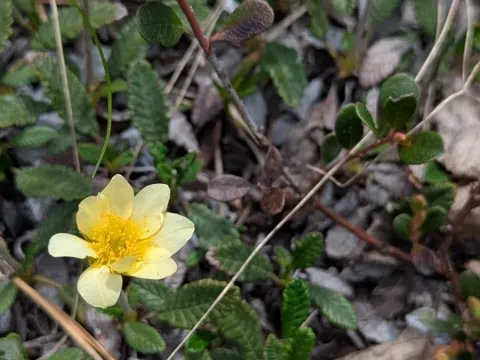
Suendermann's avens
Dryas suendermannii
Suendermann's avens (Dryas suendermannii) is a hardy hybrid perennial belonging to the Rosaceae family, originating from the cross between Dryas octopetala and Dryas drummondii. This evergreen shrublet is highly valued in horticulture for its dense, prostrate habit and attractive foliage, which features distinct serrated edges and silvery undersides.
What the section contains
Suendermann's avens
This species is native to mountainous regions, which dictates its preference for cool climates and well-drained substrate conditions. It is specifically adapted to rock gardens, scree beds, and slopes, where it forms a carpet that helps stabilize the soil while providing year-round aesthetic appeal.
Successful cultivation of this crop depends primarily on site selection. The plants require full sun to partial shade; however, they thrive best when exposed to plenty of light, which ensures the development of their characteristic dense structure and encourages profuse flowering during the spring and early summer months.
The soil requirements are strict: the medium must be highly permeable to water and air, as the root system is susceptible to rotting in waterlogged conditions. A mix of gritty sand, fine gravel, and small amounts of mineral-rich soil creates the ideal environment for the plant to thrive and spread slowly.
In terms of agricultural management, regular maintenance involves keeping the area free from invasive weeds that might compete for nutrients. While the plant is drought-tolerant once established, supplemental irrigation during prolonged dry spells is recommended to prevent leaf scorch, provided that the water is applied directly to the base.
The main threats to the plant's health include fungal pathogens triggered by high humidity and poor air circulation. Root rot and collar rot are particularly prevalent in compacted or poorly draining soils, especially during humid summers or seasons with excessive precipitation, which can cause significant damage to established cushions.
Insects like slugs and certain types of caterpillars may feed on the foliage, potentially disfiguring the plant's tidy appearance. Effective control involves regular scouting for signs of herbivory, maintaining adequate spacing between plants to improve airflow, and applying organic or synthetic pest control agents if an infestation is detected.