
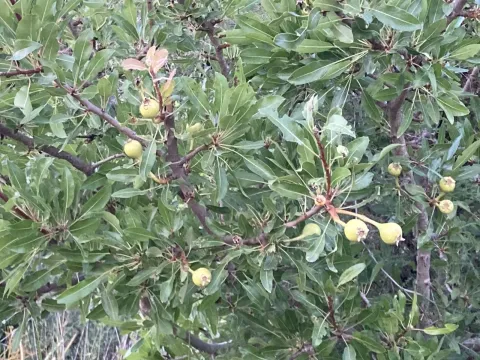
Syrian pear
Pyrus syriaca
The Syrian pear (Pyrus syriaca) is a perennial deciduous tree belonging to the Rosaceae family. It is recognized for its impressive resilience and hardiness in arid environments.
What the section contains
Syrian pear
The native distribution area of this species spans the Eastern Mediterranean, including countries like Syria, Lebanon, and Turkey. It is frequently found in rocky, mountainous terrains where few other fruit trees can thrive.
Botanically, it typically grows as a small to medium-sized tree with stiff branches. The species is highly adapted to intense sun exposure and thrives best in well-drained, nutrient-poor, or rocky soils where it can develop a deep root system.
In modern horticulture, the Syrian pear is primarily valued as a rootstock for commercial pear cultivars. Its ability to tolerate drought and poor soil conditions provides a significant advantage for arid-region agriculture.
The cultivation requirements focus on providing adequate spacing and preventing waterlogging, as the species is sensitive to poorly drained soil environments that may lead to root rot.
Like many species in the Pyrus genus, the Syrian pear is susceptible to fire blight (Erwinia amylovora). This bacterial disease poses the most significant threat to its health and vigor.
Fungal diseases, including pear scab and leaf spot, can appear if the tree is exposed to prolonged humidity. Proper pruning to ensure sufficient air circulation through the canopy is a critical management practice.
Common pests affecting this species include aphids, pear psylla, and spider mites. These insects can significantly weaken the tree, especially during the peak of the growing season.
To mitigate these threats, integrated pest management (IPM) strategies should be implemented. This includes the use of dormant oil sprays and targeted application of approved pesticides.
Maintaining proper tree health through appropriate fertilization and regular removal of infected twigs can minimize the risk of recurring infestations and disease outbreaks.