
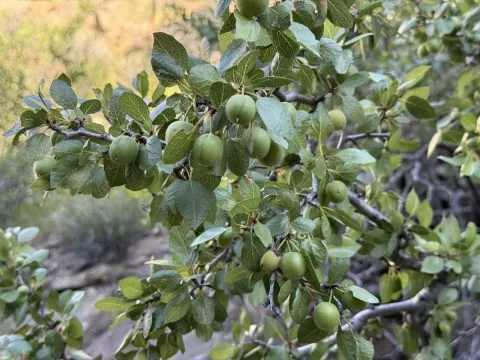
Fremont's desert plum
Prunus fremontii
Fremont's desert plum, known botanically as Prunus fremontii, is a hardy deciduous shrub belonging to the Rosaceae family. It is native to the dry canyons and desert slopes of Southern California and Mexico, showcasing remarkable adaptation to arid environments.
What the section contains
Fremont's desert plum
This shrub requires full sun exposure to thrive and maintain its dense, compact growth habit. It is highly resistant to intense heat, making it an excellent candidate for xeriscaping in regions with Mediterranean or desert climates.
Regarding soil preferences, it demands excellent drainage. It performs best in rocky, sandy, or gravelly substrates where oxygen can easily reach the roots. Heavy clay soils are generally unsuitable and can cause root health issues.
The plant is adapted to limited rainfall and does not require regular irrigation once it is fully established. It possesses an extensive root system that effectively captures water from infrequent precipitation.
In terms of agricultural and horticultural use, it is primarily valued for its role in erosion control and as a habitat for local wildlife. While the fruits are edible, they are small and tart, mainly consumed by birds and small mammals in their natural habitat.
Prunus fremontii can be susceptible to common pests such as aphids, which typically infest new, tender growth during the spring season.
Fungal infections, particularly those affecting the foliage, may occur if the plant is exposed to excessively humid conditions or poor air circulation within the shrub canopy.
Root rot is the most significant threat to the plant's survival, specifically triggered by overwatering or planting in poorly drained soil types.
Physical damage by herbivores, such as rabbits or deer, can be problematic for young plants, often requiring the use of protective wire mesh or fencing.
To maintain plant health, it is essential to monitor for signs of infestation and perform selective pruning of damaged branches to improve overall plant vigor.